
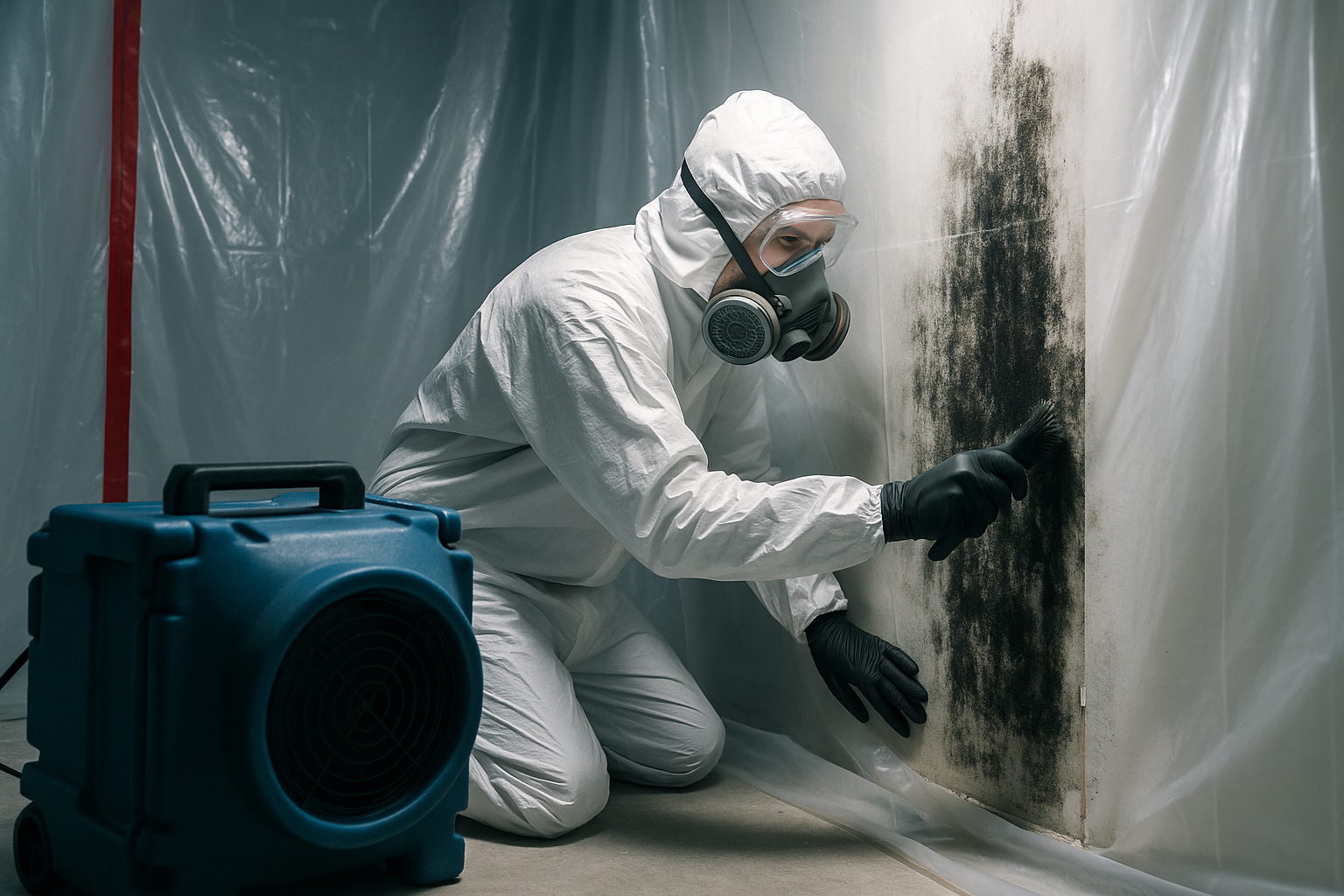
What "black mold" actually is
The phrase usually refers to Stachybotrys chartarum, a greenish-black mold that needs material to stay wet for days, not hours — but several dark molds look nearly identical, and from a removal standpoint the Latin name barely matters. What matters is what it tells you: somewhere, water has been feeding that colony steadily. In Pompano Beach the usual suspects are a roof leak from the last storm, a sweating AC air handler or duct, a slow slab or supply-line leak, condensation inside a sealed wall on the shady side of the house, or flood water that was painted over instead of dried out.
Is it dangerous?
The honest answer is more measured than the headlines. The CDC and EPA agree that indoor mold — any color — can trigger real symptoms: congestion, coughing, wheezing, eye and skin irritation, and asthma flare-ups, especially for children, older adults, and anyone with respiratory conditions or a weakened immune system. The dramatic "toxic black mold" illnesses you may have read about aren't well established by the science. The sensible position: don't panic, don't live with it, and don't scrub a large colony without containment, because disturbing it launches enormous numbers of spores into air your AC will then distribute to every room.
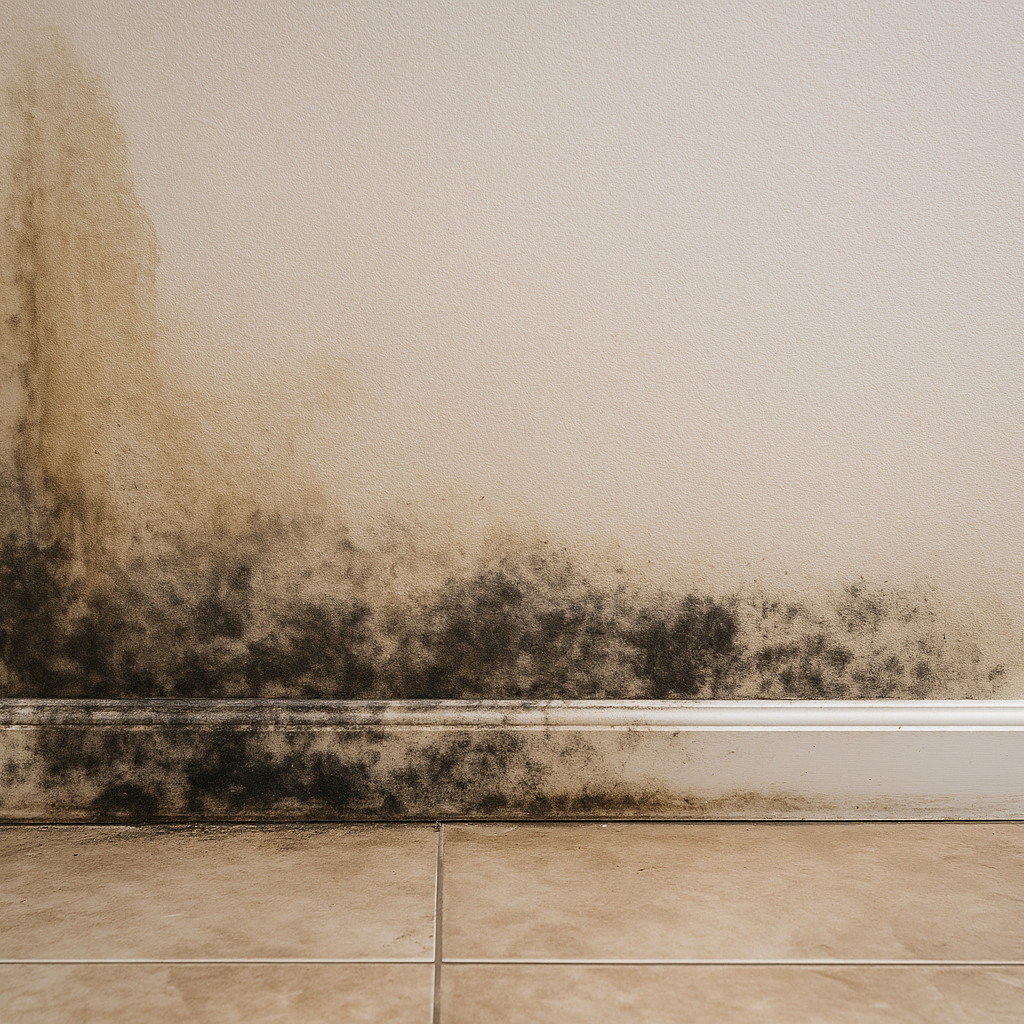
Black mold traced to a slow leak behind the wall
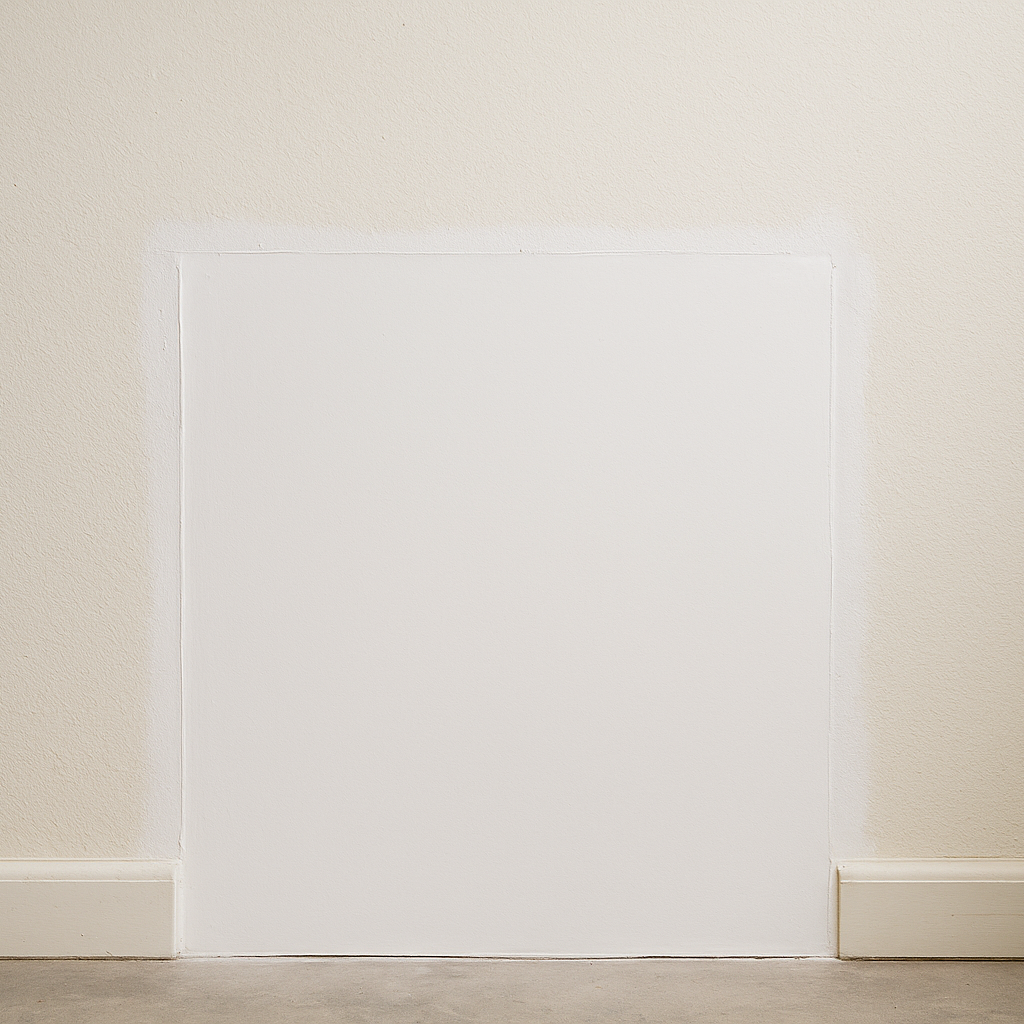
Source fixed, contaminated drywall replaced, clearance verified
Why bleach is the classic Florida mistake
Bleach lightens the stain on the surface, but on porous drywall the mold's root structure sits below where bleach — which is mostly water — can reach. You erase the color, add moisture, and the colony regrows in weeks, often behind fresh paint where it's harder to spot. Worse, scrubbing aerosolizes spores. Real remediation doesn't try to sterilize contaminated porous material; it removes it.
The containment-first removal process
- Seal the work area. Plastic containment with a zippered entry, and a HEPA air scrubber pulling negative pressure so spores can't drift to clean rooms.
- Protect the HVAC. The system is shut down or sealed at the registers — critical here, where the AC touches every room.
- Remove contaminated porous materials. Affected drywall, insulation, and baseboard are cut out past the visible edge and double-bagged for disposal.
- Clean what stays. Framing, block, and other salvageable surfaces are HEPA-vacuumed and treated with an appropriate antimicrobial.
- Dry and fix the source. The cavity is dried to a verified moisture target and the leak — roof, plumbing, or AC — is repaired so the mold can't return.
- Verify. Under Florida's two-license system, an independent assessor can run post-remediation clearance testing before the wall closes up.
If you've just found a large colony
Close the door to the room, turn the AC off or close that room's vents if you can, and resist the urge to scrub or spray. Take a photo from the doorway for documentation, then get a licensed pro to look at it under proper containment. In this climate the colony took weeks to grow — one more day handled correctly is far better than an hour of DIY that seeds the whole house.
Where black mold hides in Pompano Beach homes
Local patterns worth knowing: the wall shared with an AC closet, where a clogged condensate line has been wetting the drywall from inside; the ceiling below a flat or tile roof that took storm damage a season ago; the bottom two feet of exterior walls in homes that took surge or king-tide water and were painted rather than opened; and behind furniture pushed against outside walls in rooms that run humid. If you smell mustiness but see nothing, those four places are where an assessor looks first.