
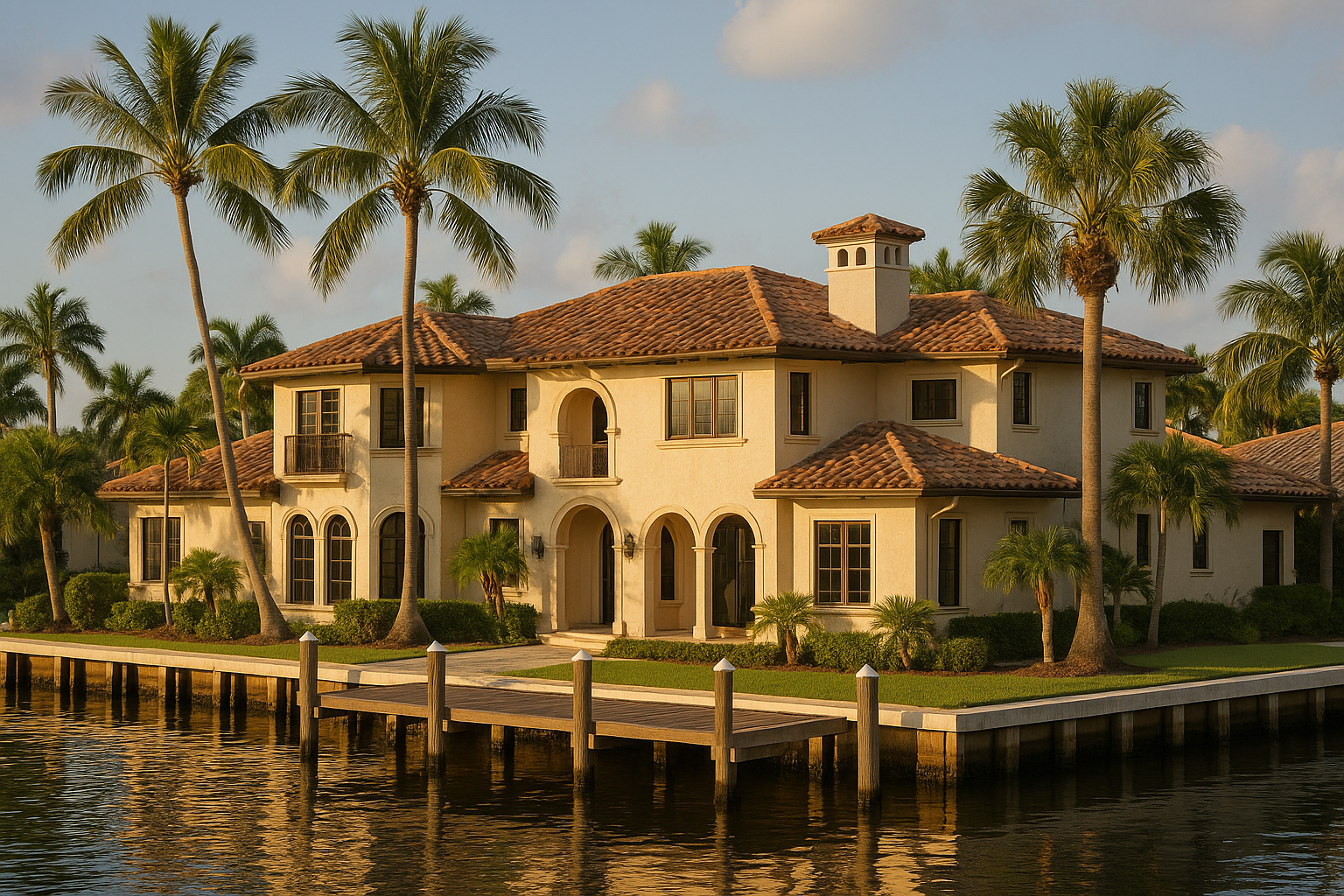
Mold in Harbor Village
Harbor Village sits between the Intracoastal Waterway and the beach (ZIP 33062), its Mediterranean-style homes a short walk from the Pompano Beach pier and oceanfront. It's one of the city's signature waterfront addresses — and everything that makes it desirable also keeps it damp. Homes back onto the Intracoastal or its canals, docks hold boats a few steps from the lanai, and the air off the water never really dries out.
The Mediterranean architecture brings its own considerations: barrel-tile roofs whose underlayment, not the tile, is the real waterproofing — and underlayment ages invisibly until a wind-driven storm finds it; stucco over block that hairline-cracks and wicks; and parapets, balconies, and roof-deck transitions that are classic slow-leak details. Meanwhile the waterfront exposure means salt spray on every seaward seal and window frame, and fall king tides lapping at seawalls and low garden walls. During Hurricane Irma, a canal sensor in Pompano Beach recorded water more than three feet above normal — Harbor Village's seawalls have seen serious tests in living memory.
The local playbook: have the tile roof's flashing and penetrations checked before each season, watch interior baseboards on seaward walls for the first hint of wicking, and treat any post-storm ceiling stain as urgent rather than cosmetic. Waterfront homes reward that vigilance — and punish paint-over repairs.
Harbor Village also has a quiet indoor-humidity challenge: many homes here open big sliders to the water view for weeks at a time in the pleasant months. Every hour those doors stand open, Gulf-Stream air loads the interior with moisture the AC then has to fight back out — and closets, cabinetry, and art on outside walls feel it first. Enjoy the breeze, but give the house recovery time with the doors closed and the system running, and keep an eye on a hygrometer; if the interior spends its evenings above 60%, the sliders are winning.
The king-tide factor
From roughly August through November — peaking in October — the year's highest tides push seawater up through storm drains and over low seawalls across coastal Pompano Beach, flooding low streets on perfectly rainless days. Broward County calls it sunny-day flooding, and neighborhoods near the canals and Intracoastal see it most: water rising from the drains at the curb, standing in swales, lapping at the base of seawalls twice a day for a stretch of mornings each fall.
Most of that water never enters a house, which is why it gets underestimated. But repeated wetting of garages, slab edges, ground-level storage, and the lowest courses of wall does two quiet things: it keeps those materials from ever fully drying during tide season, and it leaves salt residues that attract and hold moisture long after the water recedes — the slow, steady feed that low-wall mold loves. If tide water reaches your lot each fall, treat it as part of the house's maintenance calendar: an annual moisture scan of the lowest interior wall sections after tide season, drainage and seawall kept in repair, and anything stored on a ground-level slab lifted onto racks. And if tide water ever actually enters living space, treat it as the contaminated, corrosive water it is and dry professionally the same week.
The waterfront prevention rhythm
Homes this close to the water stay dry on routine, not luck. The calendar that works here: roof, flashing, and seal inspection every spring before storm season; seawall, yard-drain, and dock-side drainage checked before the fall tides; AC serviced yearly with the condensate line cleared and a float switch installed; and a hygrometer inside confirming the house holds 45–55% humidity. After any named storm, walk the interior perimeter with a flashlight — ceilings, window heads, and the lowest baseboards on the weather side — and treat any new stain as a live leak until a moisture meter says otherwise. None of this is expensive; all of it is cheaper than the remediation it prevents.
Mold services we arrange here
Whatever you're seeing or smelling, we'll match you with a licensed, independent local pro. The most-requested work in this part of town:
- Mold inspection & testing — find out what it is, how far it's spread, and where the water comes from.
- Hurricane, flood & water-damage mold — fast drying after storms, tides, and plumbing failures.
- AC & air-duct mold removal — the musty-at-startup problem, solved at the source.
- Black mold removal — containment-first removal with clearance testing.
- Condo & apartment remediation — unit containment and HOA coordination done right.
Every match is with an independent, Florida-licensed professional carrying their own insurance, the assessment and quote are free, and there's no obligation at any step. For anything involving active water — a storm leak, a burst line, tide water in the garage — say so when you call and we'll treat it as the same-day problem it is; in this climate the first 24–48 hours decide whether wet materials dry or grow.
Nearby areas we cover
We connect homeowners across the city and its coastal neighbors. Close by: Garden Isles · Santa Barbara Shores & Estates · Hillsboro Shores — or see all service areas.