
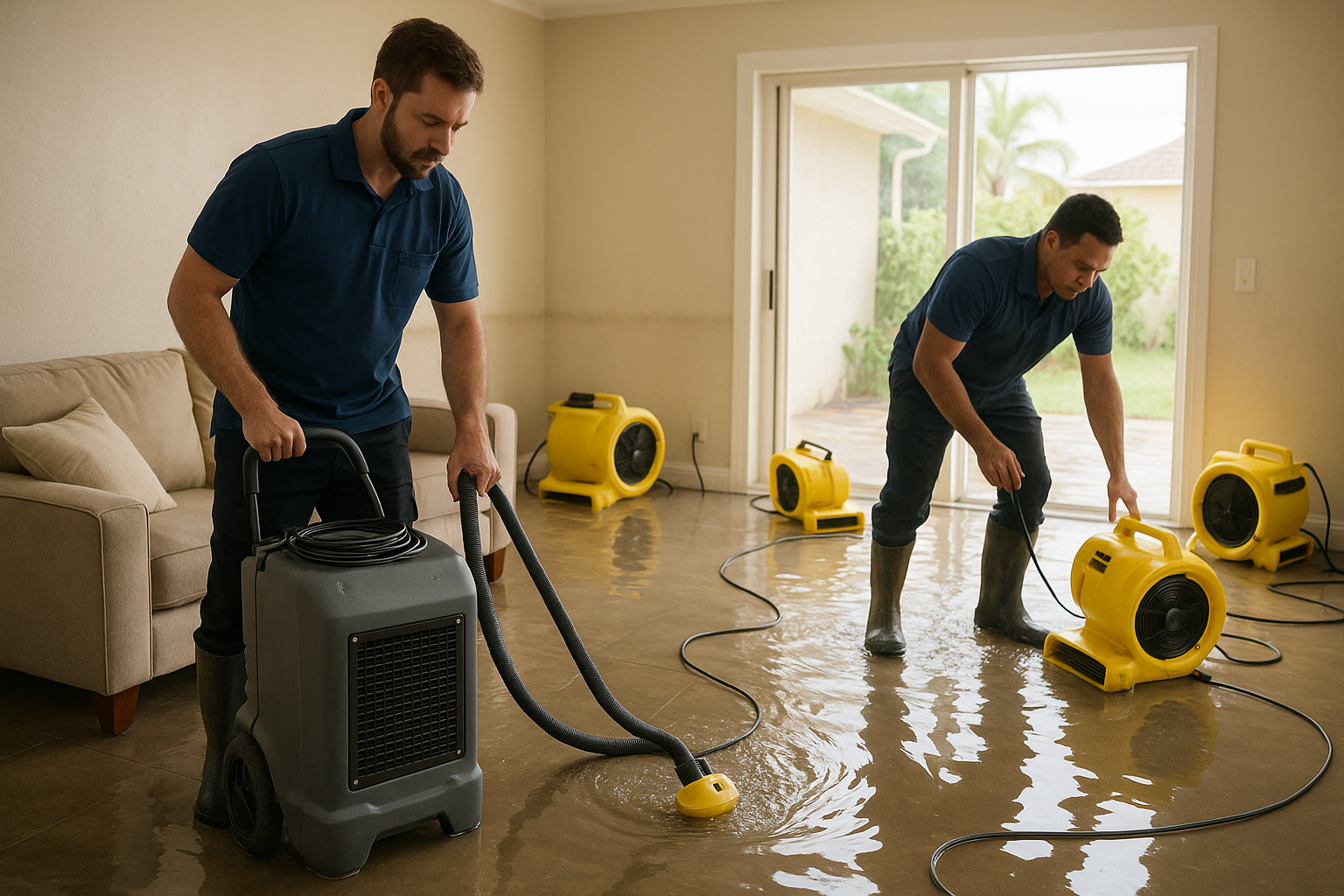
Water finds Pompano Beach from every direction
Few cities have more ways to get wet. Hurricane and tropical-storm rain and surge come off the Atlantic — during Hurricane Irma in 2017, a sensor on a Pompano Beach canal recorded water more than three feet above normal levels. October king tides push seawater backward through the storm drains and over seawalls, flooding low streets on perfectly sunny days. Summer downpours drop several inches an hour onto flat coastal ground. And inside the house, aging supply lines, water heaters, and AC condensate drains fail the ordinary way. First Street's flood modeling puts roughly 93% of Pompano Beach buildings at some flood risk — effectively, water is a when, not an if.
Why the clock matters so much here
Mold needs wet material and warmth, and after a flood a South Florida home supplies both in abundance. Drywall wicks water upward within hours; insulation and bottom plates hold it for weeks; and with outdoor dew points in the 70s, opening the windows doesn't dry anything — it makes it worse. Box fans can't overcome that physics. Professional extraction, air movers, and commercial dehumidifiers can, if they start inside the first day or two.
The three categories of water
- Category 1 (clean): a supply line or water-heater failure. Caught fast, much can be dried in place.
- Category 2 (gray): appliance overflows, AC condensate. More removal required.
- Category 3 (black): storm surge, king-tide seawater, canal overflow, and anything that crossed the ground — which is most Pompano flood water. It carries contaminants (and salt), so porous materials it touched come out. Saltwater adds its own problem: residues keep attracting moisture and corrode fasteners and wiring long after the water is gone.
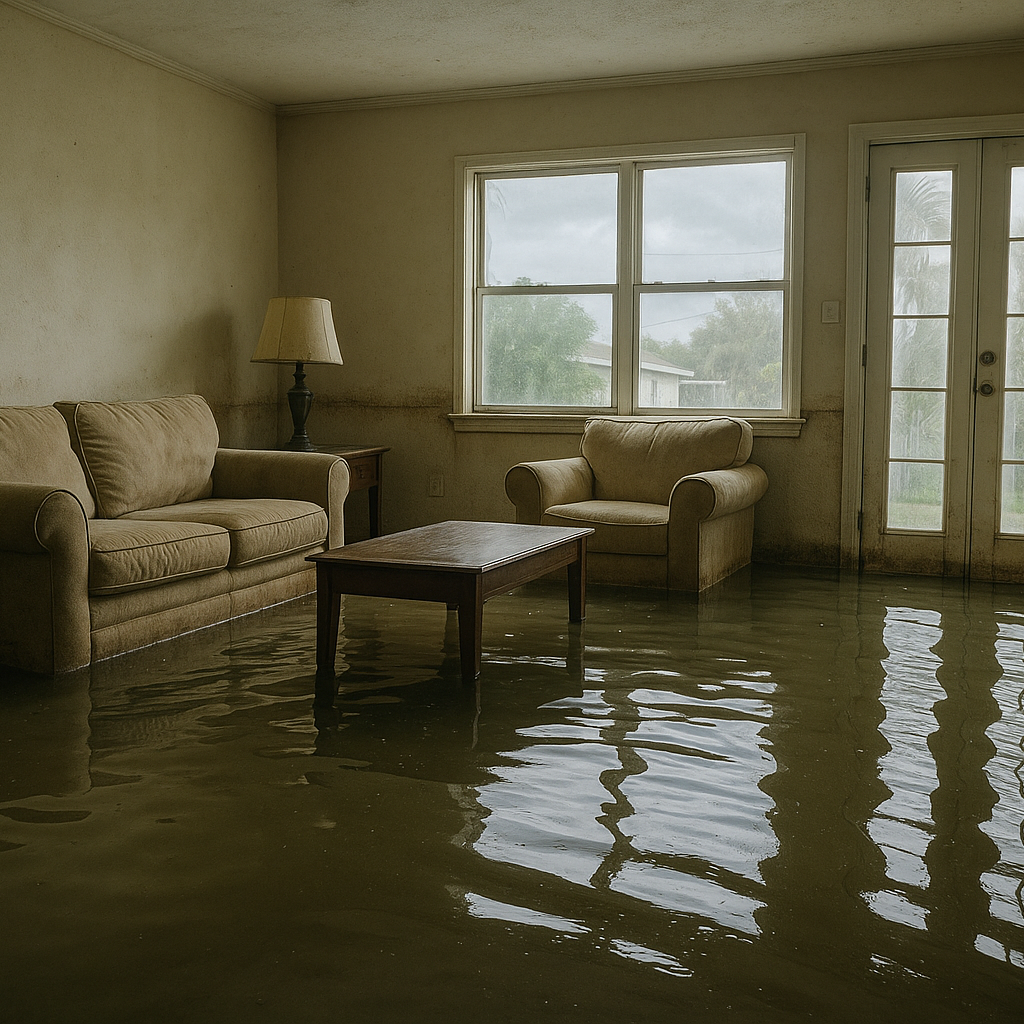
Storm water with a wicking line climbing the drywall
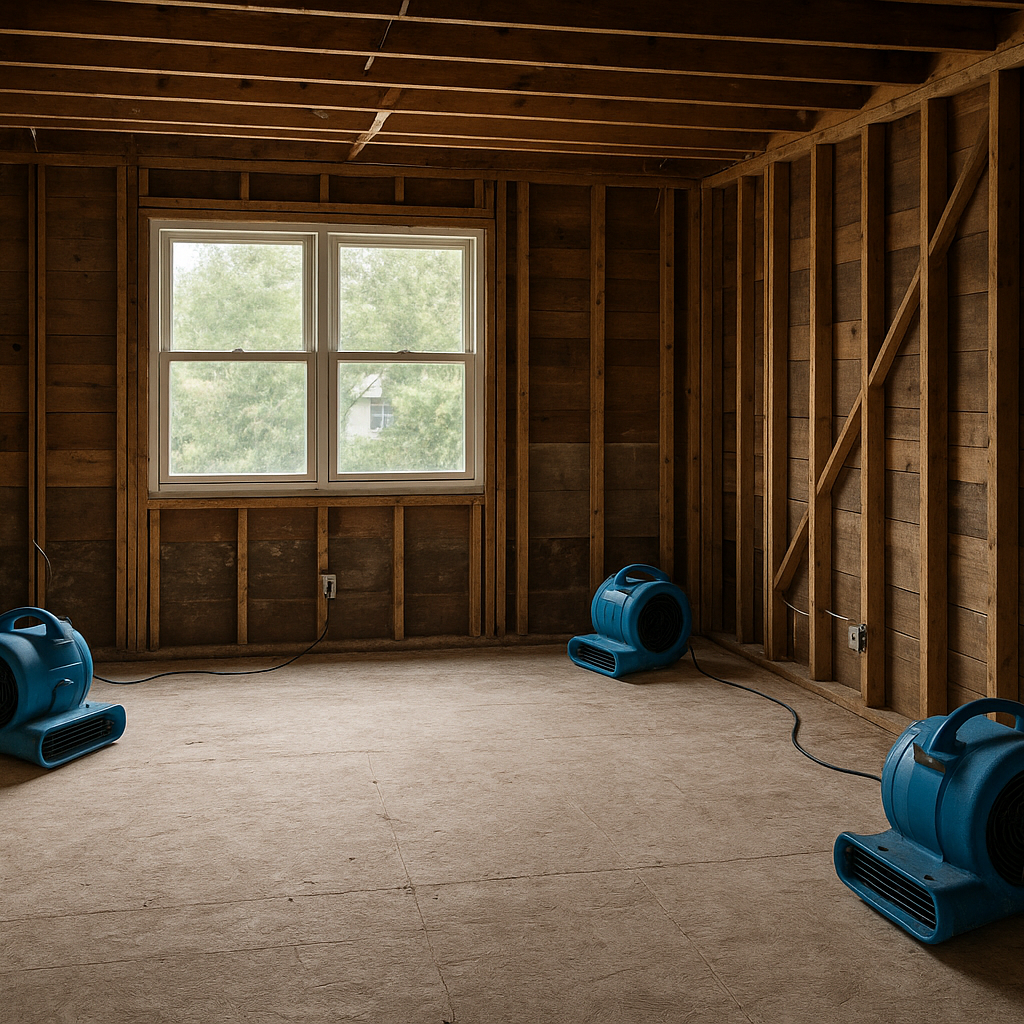
Flood cut, dried to verified targets, rebuilt clean
What professional flood response looks like
- Extraction. Truck-mounted or portable extractors pull standing and absorbed water fast.
- Flood cut. For contaminated water, drywall is cut a uniform height above the water line; soaked insulation, flooring, and cabinetry toe-kicks come out.
- Structural drying. Air movers and commercial dehumidifiers run for days, tracked with moisture meters — not by feel.
- Cleaning and treatment. Exposed block and framing are cleaned, treated, and — after saltwater — rinsed of residues.
- Verification and rebuild. Materials reach a measured dry standard before anything closes up; clearance testing is smart after any major event.
The first 24 hours: your checklist
- Stay out of standing water near outlets or the panel; electricity first, always.
- Stop the source if you safely can (main shutoff for plumbing failures).
- Photograph and video everything before you move or discard anything — your insurer will want it.
- Run the AC if it's safe; it's your best built-in dehumidifier while help is on the way.
- Move rugs, furniture, and electronics up and out of the wet zone.
- Call for professional extraction immediately — every hour of drying you buy saves drywall.
King tides: the flood that arrives on a sunny day
Every fall — typically August through November, peaking in October — the year's highest tides push ocean water up through Pompano Beach's storm drains and over low seawalls. Streets in the lower canal-front neighborhoods flood with no rain at all. Most king-tide water stays outside homes, but garages, ground-floor storage, and slab edges get wet repeatedly, and salt residue keeps those materials damp between events. If tide water regularly reaches your property, an annual moisture check of the lowest wall sections is cheap prevention — and if it ever enters the house, treat it as the contaminated (and corrosive) water it is.