
The one number that matters
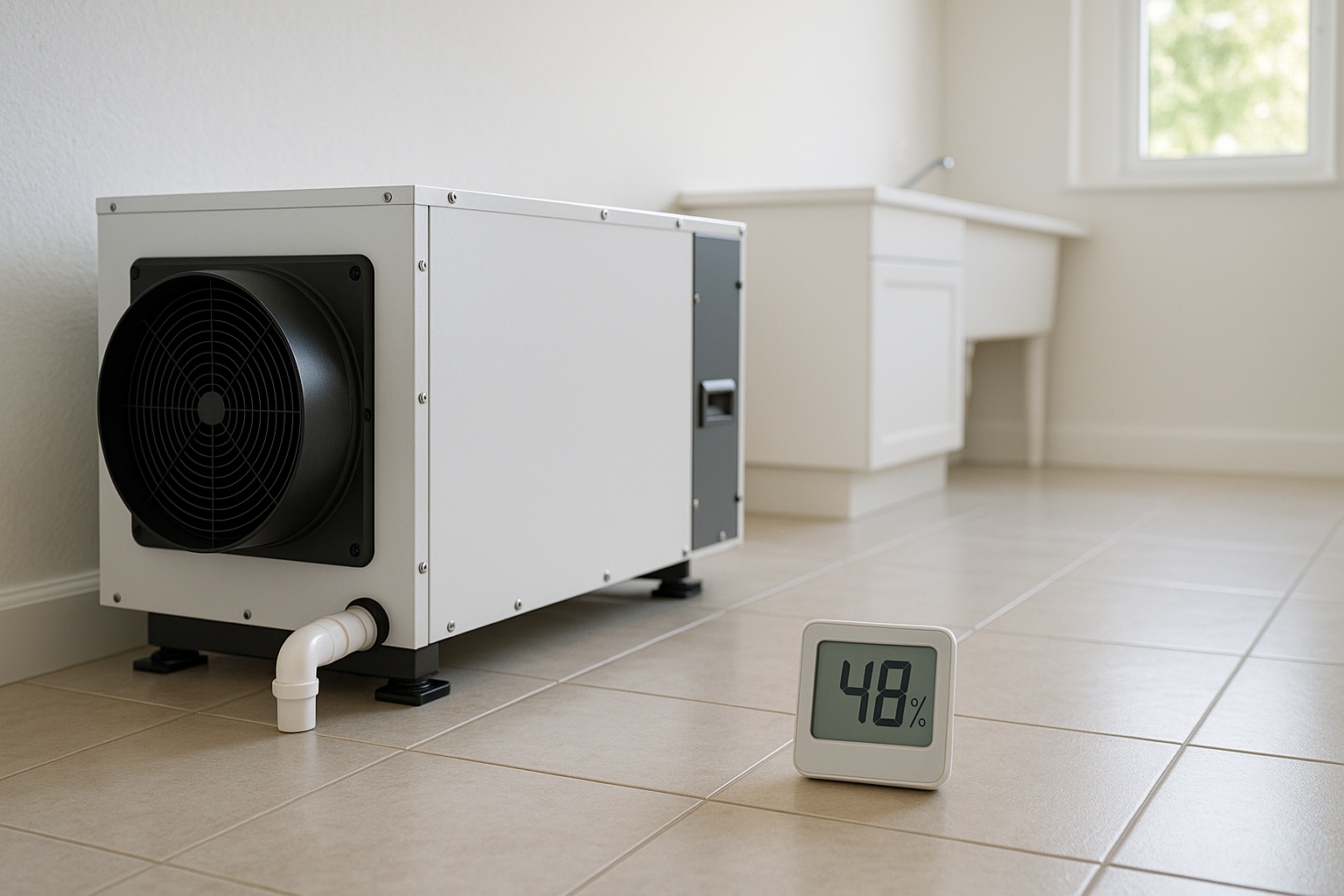
Indoor mold prevention in Pompano Beach reduces to a single measurable goal: keep relative humidity between 45 and 55%, and never let it live above 60%. Below that line, mold on ordinary surfaces stalls; above it, growth becomes possible with no leak at all. Buy two or three $15 digital hygrometers, put them in the main living area, the master closet, and any room that ever smells musty, and believe what they say. Everything else on this page serves that number.
Make the AC do its real job
- Service it yearly, before summer: clean coil, clear condensate line, correct charge. A dirty coil and a slow drain are the two most common pre-mold conditions in local homes.
- Add a float switch to the condensate line ($20–50 installed with service) so a clog shuts the system down instead of flooding the air-handler closet.
- Right-size at replacement. Bigger is not better: an oversized unit cools fast and shuts off before dehumidifying. If your house runs cold-and-clammy, say the word "clammy" to your AC contractor and ask about sizing and fan settings.
- Consider dedicated dehumidification if the hygrometers won't hold under 60% on muggy shoulder-season days — a whole-home unit or even a decent portable in the problem zone changes the equation.
- Don't switch it off when you travel. Set ~77–78°F with a humidistat around 58–60%. The vacant-summer bloom is South Florida's most preventable mold disaster.
Bathrooms, kitchens, closets
- Run the bath fan during and 20 minutes after every shower — a timer switch makes it automatic — and confirm the duct vents outdoors, not into the attic (a very common local shortcut).
- Re-caulk at the first crack. Failed caulk lets water behind tile where it feeds what you can't see.
- Fix drips the week you notice them. An under-sink drip is the most common kitchen mold source in the city; $12 leak sensors under sinks and at the water heater are the best money in home ownership.
- Give closets airflow. Louvered doors or simply cracking them, furniture off exterior walls, and nothing damp stored inside. Closets on outside corners are where humidity blooms show first.
The building envelope, on a coastal schedule
- Roof check every spring and after every named storm — on tile roofs it's the underlayment and flashing that fail, invisibly from the street.
- Seals and frames yearly on the weather side, more often within a mile of the ocean where salt eats them early.
- Gutters, downspouts, and yard drains clear before the wet season; grade and swales moving water away from the slab.
- Near the water: seawall and drainage sound before the fall king tides; storage lifted off ground-level slabs; a moisture scan of the lowest interior walls after tide season if water reaches your lot.
Storm season, specifically
Before: photograph the house inside and out as a baseline, stock tarps and towels, and know where your water shutoff is. After any storm: walk the interior with a flashlight the same day — ceilings, window heads, closet ceilings, the AC closet — and treat any new stain as a live leak. If water got in, the clock is real: in this heat, mold can establish in wet materials within 24–48 hours, which is why same-week professional drying after intrusion is the single highest-value habit on this page. Our after-flooding guide covers those first days step by step.
When prevention has already failed
If you can smell it or see it, prevention has done its job of telling you early — now scope it before you scrub it. Small surface spots on hard materials are reasonable DIY; anything on drywall, anything recurring, and anything with a musty smell but no visible source deserves an independent inspection first. In an air-conditioned house, uncontained cleanup spreads spores to every room the ducts reach.