
Mold in Old Pompano & Downtown
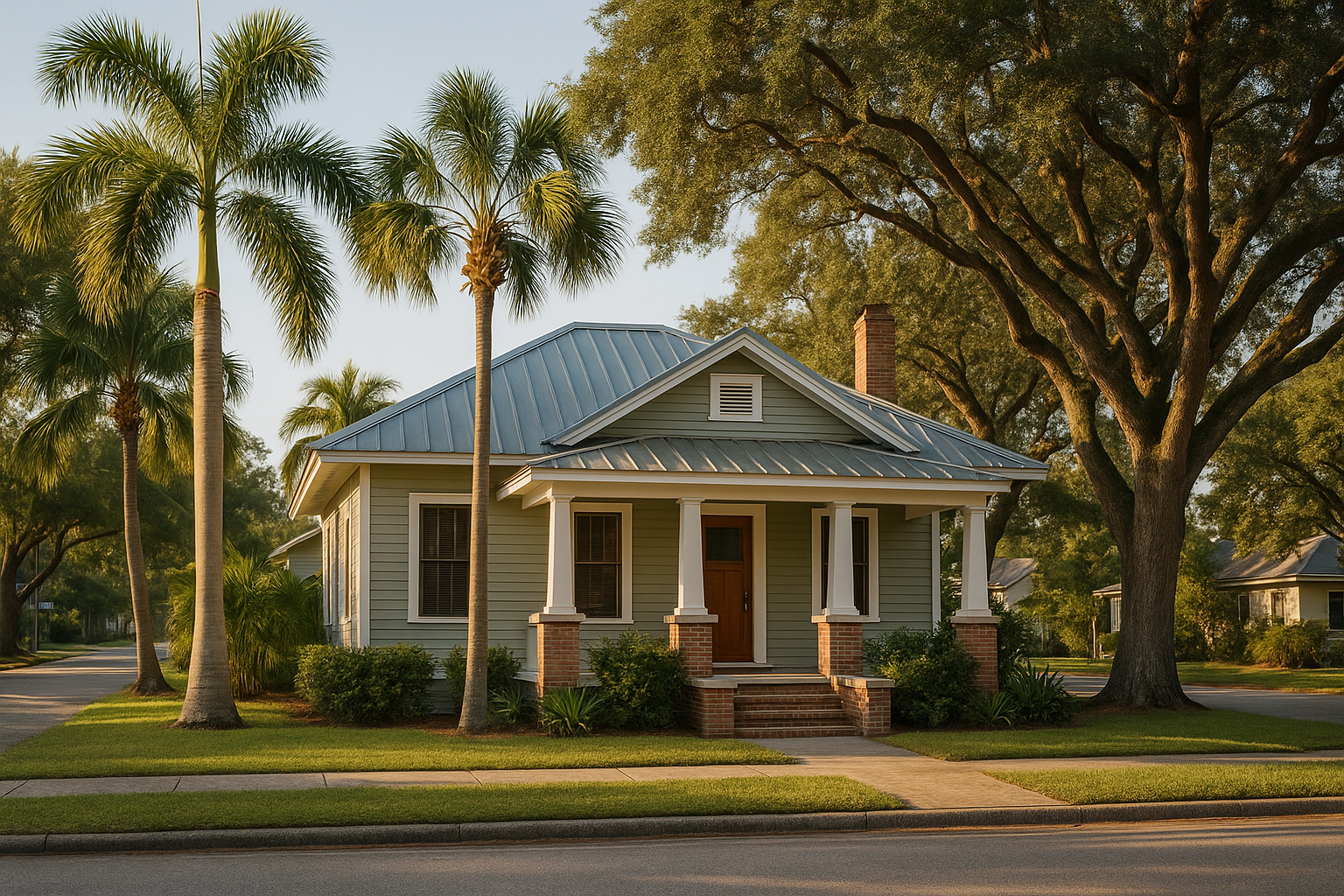
Old Pompano and the Downtown district around the Cultural Center and Bailey Contemporary Arts are where the city began — a farming town that grew up along the FEC railroad and Dixie Highway, incorporated back in 1908. The housing here spans a century: pre-war cottages, mid-century block homes, and a wave of new infill riding the downtown revitalization. That range is exactly what makes moisture work here interesting.
The older homes carry age-related risks you won't find in a 2015 build: roofs that have been layered and patched across generations, original cast-iron and galvanized plumbing reaching end of life, window and door openings reworked in multiple remodels, and central air retrofitted into houses never designed for ducts — often with air handlers wedged into closets or garages where a clogged condensate drain goes unnoticed. Additions and enclosed porches create wall junctions where two eras of construction meet, and those seams are classic hidden-leak territory.
Meanwhile the new townhomes and infill around Downtown have the opposite profile: tight, energy-efficient envelopes that hold humidity indoors if the AC doesn't actively wring it out, plus construction moisture that can seed growth in a building's first year or two. Different eras, same physics: water plus warmth. In ZIP 33060, both get plenty of each.
One more Old Pompano pattern worth naming: the enclosed porch and garage conversion. Generations of owners here turned porches, carports, and garages into living space, and those conversions often sit on slabs poured at grade with minimal vapor protection, roofed with low-slope sections tied awkwardly into the original structure. If one room in an older Pompano home always smells different — mustier, cooler, damper — it's very often the converted one, and a moisture scan of its slab edges and roof tie-in is the place to start.
The wet-season factor
Roughly two-thirds of Pompano Beach's annual rain — about 40 of nearly 60 inches — falls between May and October, with hurricane season peaking August through October. That's when roof weaknesses announce themselves, when gutters and flat sections pond, and when a house that was marginal on moisture tips over into active growth. Summer downpours here can drop an inch or more in an hour onto flat coastal ground, and the drainage backs up exactly when the roof is being tested hardest.
The practical takeaway: date your problem. If the stain, smell, or allergy flare appeared or worsened between June and October, the wet season almost certainly found the way in — a lifted shingle or slipped tile, a flashing seam, a window seal on the weather side, or simply humidity the AC lost ground against during weeks of saturated air. A moisture inspection can trace the path in an hour or two, and fixing it before the next tropical system is always cheaper than after. Pre-season is also the smart time to book roof and seal checks, when contractors have slack and the fix can cure before it's tested.
The midcentury-home prevention rhythm
Sixty-year-old block homes handle this climate remarkably well when three systems are watched. The roof: inspected each spring and after every storm, because underlayment and flashing age invisibly and the wet season audits them annually. The plumbing: original galvanized and early copper lines are at or past end of life across this housing stock, so leak sensors under sinks and at the water heater ($10–15 each) are the best money in home ownership. The AC: serviced yearly, drain line cleared, float switch installed, and sized correctly at replacement — the clammy-but-cold house is an oversized system telling on itself. Add a hygrometer holding the interior under 60% humidity and a habit of investigating any musty smell within the week, and a midcentury home here stays as dry as new construction.
Mold services we arrange here
Whatever you're seeing or smelling, we'll match you with a licensed, independent local pro. The most-requested work in this part of town:
- Mold inspection & testing — find out what it is, how far it's spread, and where the water comes from.
- Hurricane, flood & water-damage mold — fast drying after storms, tides, and plumbing failures.
- AC & air-duct mold removal — the musty-at-startup problem, solved at the source.
- Black mold removal — containment-first removal with clearance testing.
- Condo & apartment remediation — unit containment and HOA coordination done right.
Every match is with an independent, Florida-licensed professional carrying their own insurance, the assessment and quote are free, and there's no obligation at any step. For anything involving active water — a storm leak, a burst line, tide water in the garage — say so when you call and we'll treat it as the same-day problem it is; in this climate the first 24–48 hours decide whether wet materials dry or grow.
Nearby areas we cover
We connect homeowners across the city and its coastal neighbors. Close by: Cresthaven · Pompano Beach Highlands · Harbor Village — or see all service areas.