
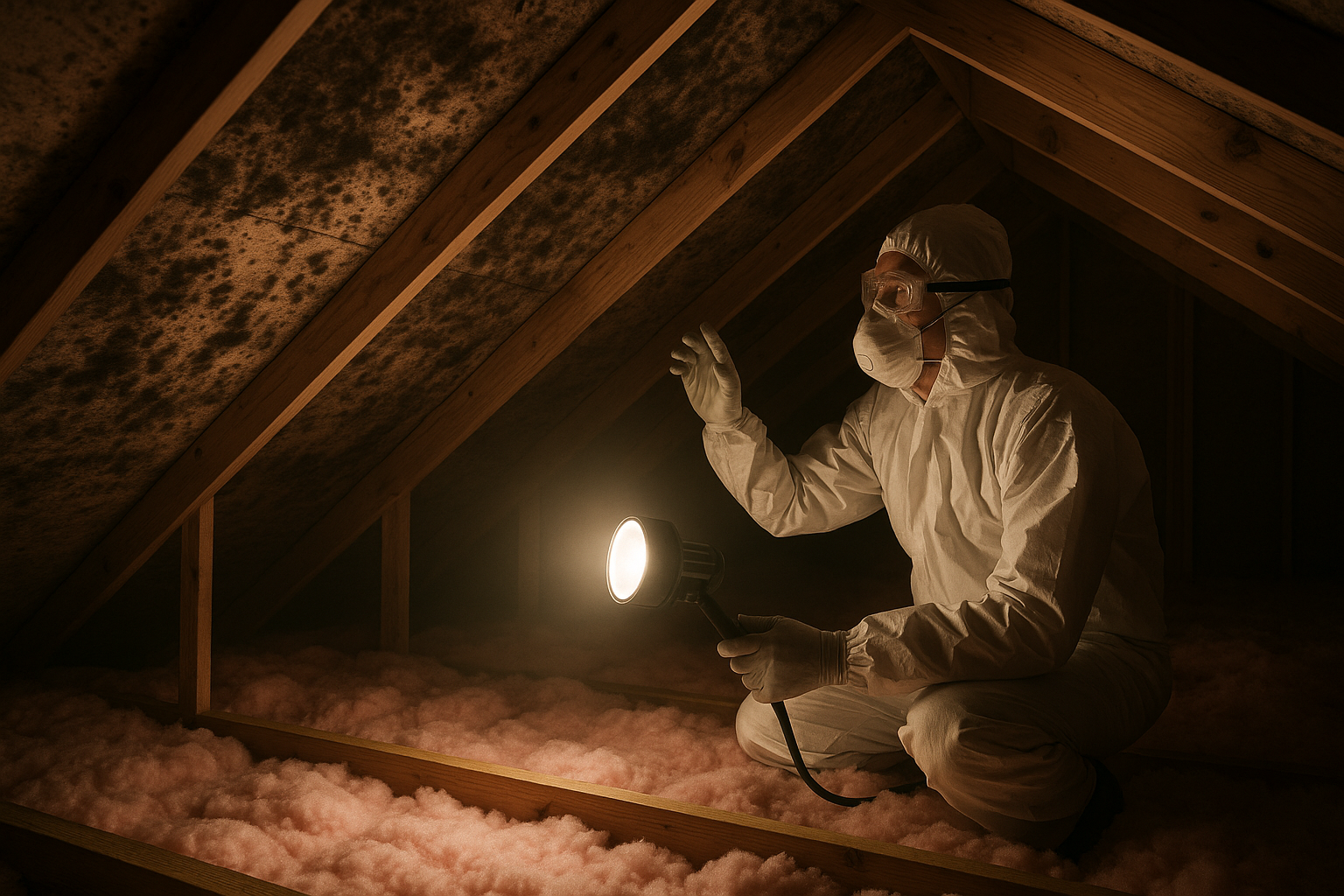
How Pompano Beach attics grow mold
South Florida attics are brutal spaces: ferociously hot, saturated with humid outdoor air, and sitting directly under a roof that takes the full force of hurricane season. Mold up there almost always traces to one of four mechanisms:
- Roof leaks. Wind-lifted shingles, cracked tiles, and failed flashing after a storm let rain track down the sheathing and trusses. Even a small leak feeds a long stripe of growth along the water's path — and in a climate where the next rain is never far away, "I'll fix it in the fall" is how stains become colonies.
- Bath fans dumping into the attic. A surprisingly common shortcut: the exhaust duct ends in the attic instead of outside, pumping warm shower moisture onto the underside of the deck day after day.
- AC equipment sweating overhead. Many local homes put the air handler and duct runs in the attic. Uninsulated or leaky ducts condense moisture in that hot, humid air and drip onto wood and insulation below.
- Blocked ventilation. Soffit vents painted over, stuffed with insulation, or clogged with debris cut off the airflow that would otherwise flush humid air out at the ridge.
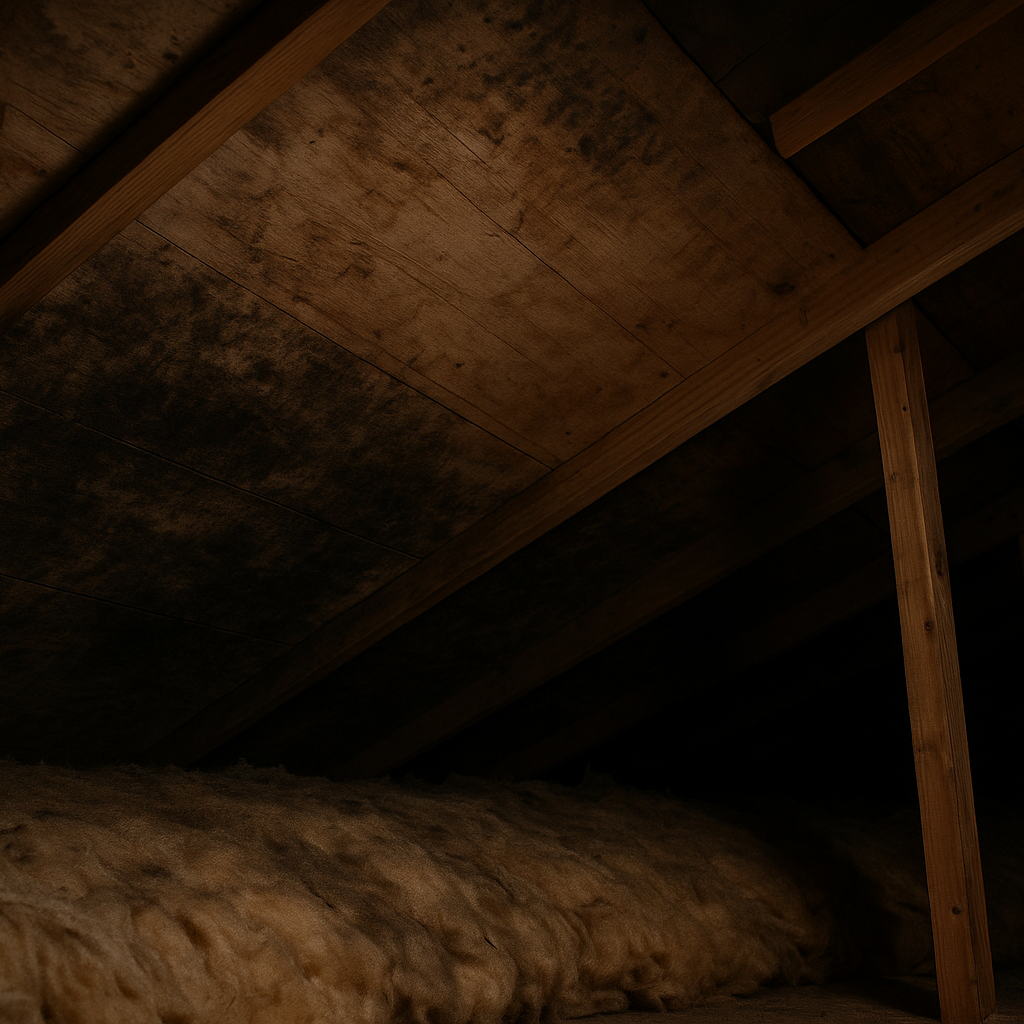
Growth following a slow tile-roof leak and blocked soffits
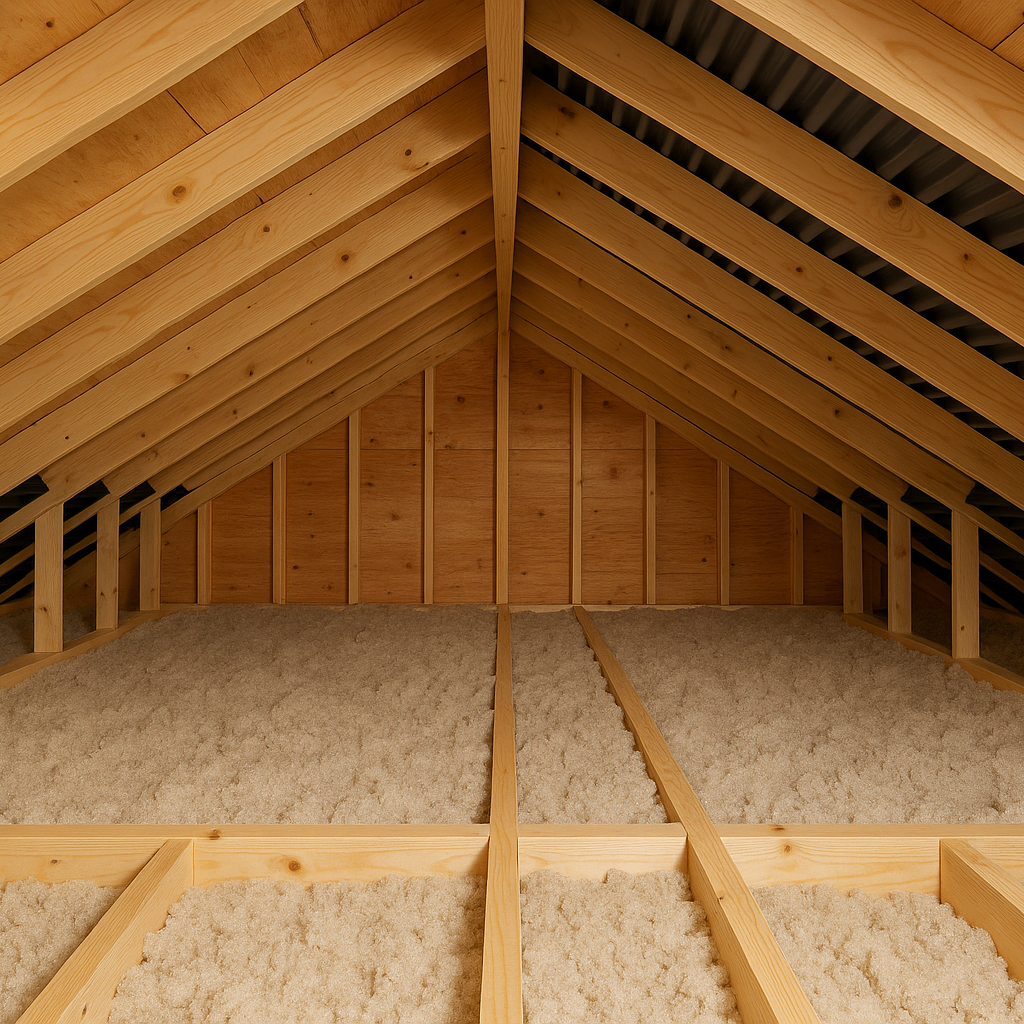
Deck treated, leak repaired, intake airflow restored
How attic remediation works here
Because attics are unfinished framing and sheathing, remediation looks different from a living-space job — you're treating wood in place, not cutting out drywall:
- Containment at the hatch. The access is sealed and negative air keeps disturbed spores from drifting into the rooms below.
- Insulation triage. Mold-laden or water-soaked insulation is bagged and removed; salvageable material stays.
- Surface remediation. Sheathing and trusses are HEPA-vacuumed, then cleaned by media blasting or antimicrobial treatment, leaving the wood clean and often sealed with a mold-resistant coating.
- Fix the moisture. The actual cure: roof or flashing repair, re-routing bath fans through the roof or soffit, sealing and insulating sweaty ducts, and clearing intake and exhaust ventilation.
- Re-insulate and verify. New insulation goes in, and moisture readings confirm the attic is drying the way it should.
Cleaning without the airflow fix doesn't last
The single most common attic-mold mistake in South Florida is paying for the cleaning and skipping the ventilation and duct work. The staining returns within a couple of humid seasons because the conditions that grew it never changed. A balanced attic — intake at the soffits, exhaust at the ridge, ducts sealed and insulated, bath fans venting outdoors — keeps the deck close to outdoor temperature so moisture doesn't linger against it. That same fix lowers the heat load on your AC, which in a Pompano Beach summer is money every single month.
After a storm: check before you close it up
If your roof took damage in a hurricane or tropical storm, have the attic side inspected before (and after) the roof repair. Water that got in during the storm doesn't leave when the tarp goes on — it sits in the insulation and sheathing, growing mold while you wait on the roofer. A quick moisture inspection up top can save you from discovering the problem a year later as ceiling stains.