Where commercial mold shows up here
- Flat and low-slope roofs on the retail strips along Atlantic Boulevard and Federal Highway: ponding after summer downpours works into seams and shows up above the ceiling grid.
- Rooftop AC units serving open floor plans — the commercial version of South Florida's #1 mold source, condensing water all year and distributing spores building-wide when contaminated.
- Restaurants and food service, where dish areas, walk-in condensate, and heavy kitchen humidity meet health-inspection stakes.
- Marinas, dive shops, and waterfront businesses living with salt air, dock humidity, and storm exposure.
- Hotels, vacation rentals, and multi-family buildings, where one unit's problem becomes a guest-review or habitability problem fast.
- Storm-damaged commercial space after hurricane season — wind-driven water above drop ceilings often isn't found until the smell arrives.
What makes commercial different
The science is the same — contain, remove, dry, verify — but the constraints are harder. Work happens nights and weekends or in phases so you keep operating. Buildings have drop ceilings, big rooftop HVAC, and sometimes specialized finishes. And the documentation load is heavier: landlords, tenants, insurers, health inspectors, and sometimes guests' attorneys all may need a clear record of what was found, what was done, and proof the air is clean. The commercial pros we connect you with treat that paper trail as a deliverable, not an afterthought.
The commercial process
- Assessment and written protocol. A licensed assessor maps the moisture and defines scope with a schedule that fits your operating hours.
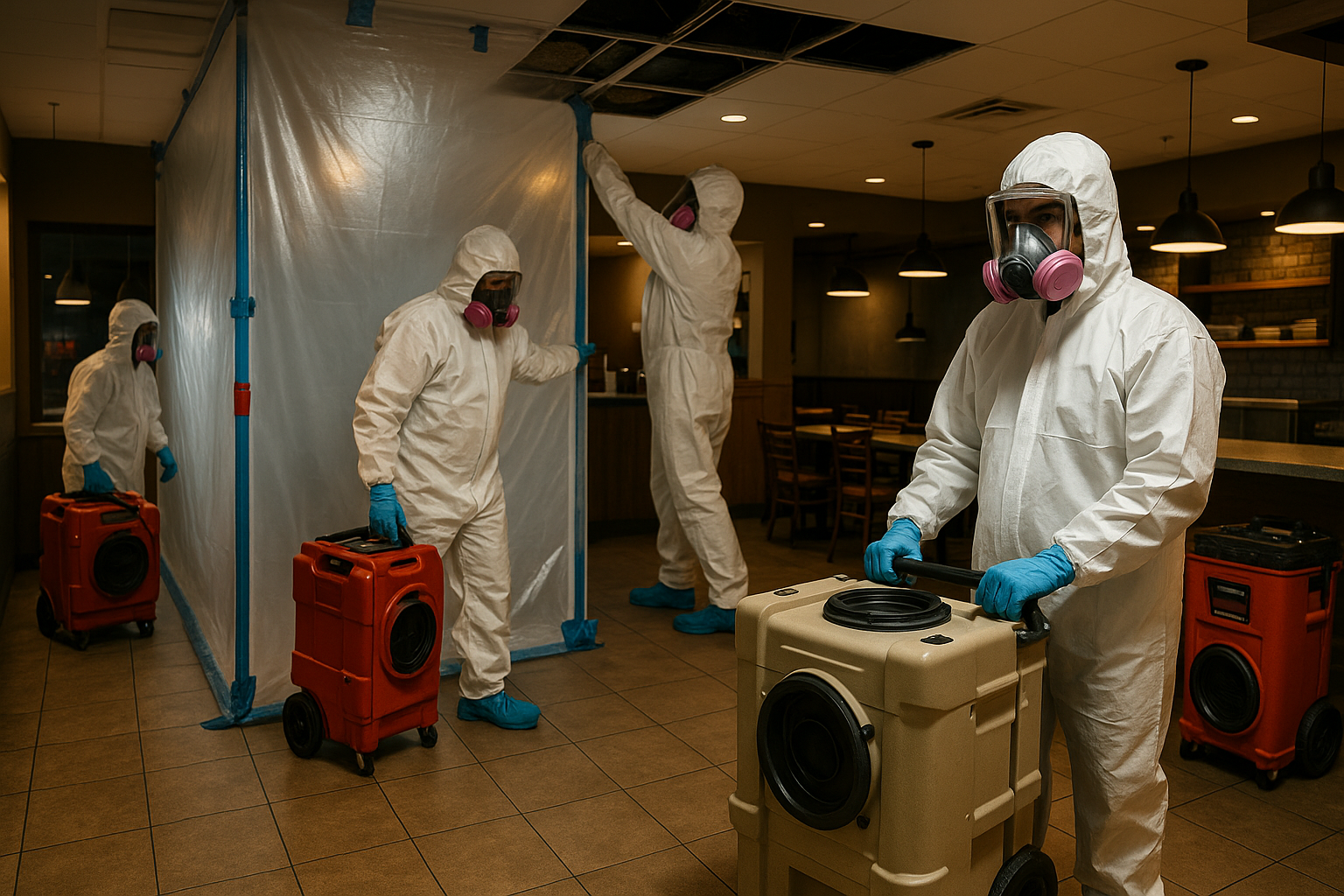
- Containment around occupancy. Affected zones sealed under negative air so the rest of the space keeps trading.
- Removal and drying of contaminated tile, drywall, and materials with commercial-scale equipment.
- HVAC coordination. Rooftop and split systems evaluated and cleaned so the building's own air handling doesn't spread the problem.
- Independent clearance and full documentation for owners, insurers, tenants, and regulators.
Landlords and tenants: settle the source early
In leased space, responsibility follows the lease and the moisture source: roof and envelope issues typically fall to the landlord, tenant-caused moisture to the tenant, and the gray zone in between is where disputes live. A documented third-party assessment of the source, obtained early, keeps a mold problem from becoming a legal one — and keeps the remediation moving while the cost question gets sorted. We regularly connect property managers with pros experienced in multi-tenant buildings.
Speed protects revenue
Every day a dining room smells musty or a unit is offline costs real money, and in our climate the problem compounds daily. Fast assessment creates options: more of the work can be phased after hours, less material is contaminated, and the reopening date moves closer. If you've spotted staining, smelled mustiness, or taken storm water, the cheapest time to call is now.