
Mold in Cresthaven
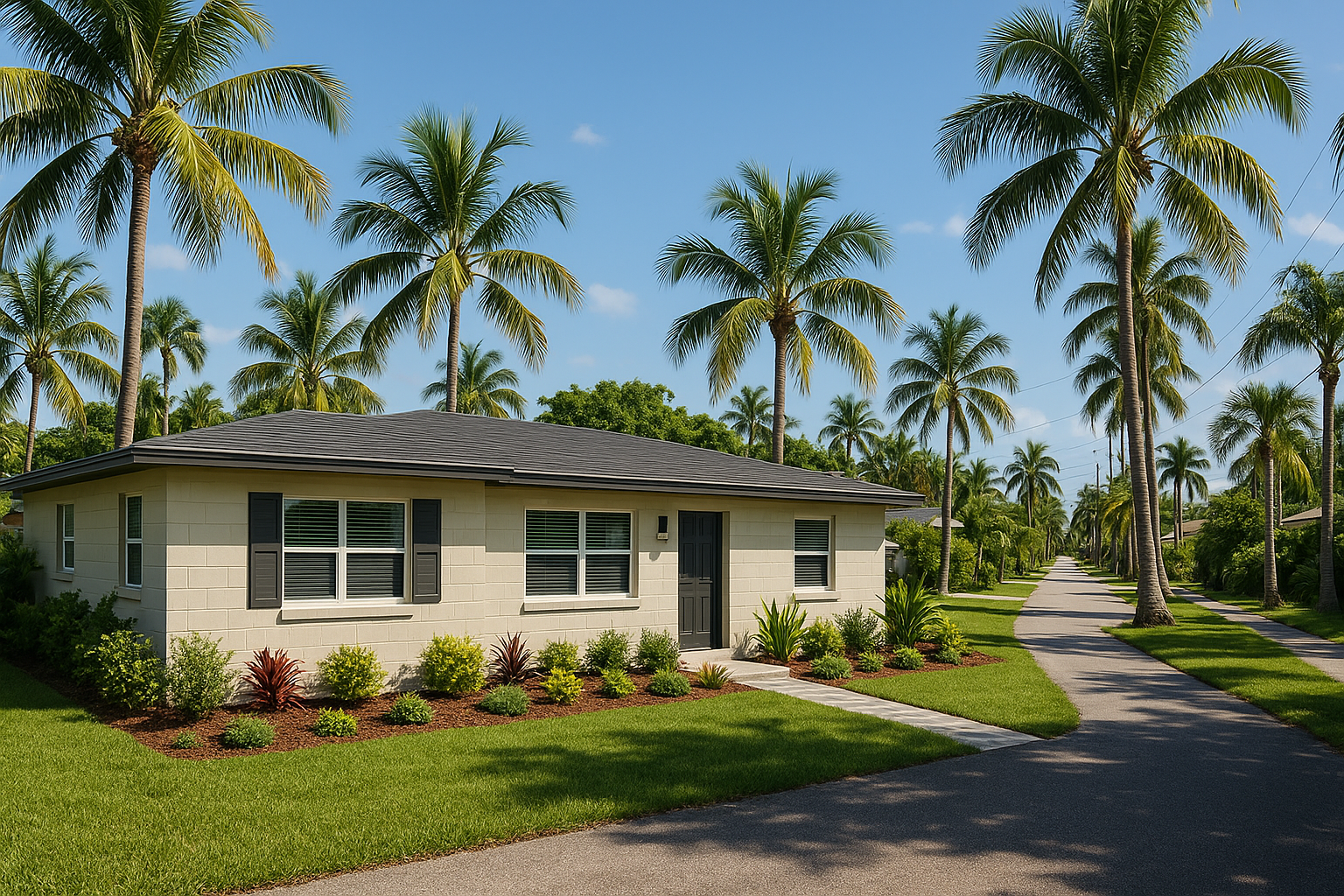
Cresthaven got its start in 1956 as a winter-retiree neighborhood of two-bedroom bungalows on a dense grid of palm-lined streets in northeast Pompano Beach (ZIP 33064), about a mile west of the ocean. Over the decades those little vacation homes were expanded into three- and four-bedroom ranches, and today the neighborhood is in the middle of a full renovation wave — homes gutted and redone, flipped, and rehabbed at a pace few Pompano neighborhoods match.
That history writes the mold story here. Seventy-year-old concrete-block homes carry original or twice-replaced flat and gable roofs, galvanized plumbing at end of life, and additions whose roof-to-roof junctions are perennial leak points. Homes that spent decades as seasonal properties often sat through summers with minimal cooling — and humidity blooms from those years can still be found inside closets and wall cavities when renovators open them up. The gut-rehab wave is a double-edged sword: it fixes old problems, but a flip that dried nothing and skipped straight to new drywall simply gift-wraps the moisture for the next owner.
If you're buying a renovated Cresthaven home, ask what was behind the old walls and whether anything was documented. If you own an original one, the cheap wins are a roof and flashing check before each hurricane season, a look at the AC condensate line, and keeping indoor humidity under 60% — the three habits that keep a midcentury block house here dry.
The year-round AC factor
Air conditioning runs essentially every day of the year in this part of Florida, and it sits on both sides of the mold ledger. On the defense side, a well-sized, well-drained system is the only thing holding your home under the 60% relative-humidity line where mold stalls — open windows don't dehumidify here; they do the opposite. On the culprit side, the AC is a cold, wet machine parked in your airstream: a clogged condensate drain backs water into the closet, an oversized unit cools fast but leaves the air clammy, and ducts sweating in a hot attic drip onto whatever's below. When any of that grows mold, the blower delivers spores to every room in the house on schedule.
Two habits cover most of it. First, put a $15 hygrometer somewhere central and believe it: if the house reads above 60% for days at a stretch, the system isn't keeping up and mold is being invited, leak or no leak. Second, service the system yearly and add a condensate float switch, so the inevitable drain clog shuts the AC down instead of flooding the wall. If the mustiness in your home is strongest in the first minutes after the air handler kicks on, start the investigation at the AC system, not the walls — that startup smell is the most reliable HVAC-mold tell there is.
The midcentury-home prevention rhythm
Sixty-year-old block homes handle this climate remarkably well when three systems are watched. The roof: inspected each spring and after every storm, because underlayment and flashing age invisibly and the wet season audits them annually. The plumbing: original galvanized and early copper lines are at or past end of life across this housing stock, so leak sensors under sinks and at the water heater ($10–15 each) are the best money in home ownership. The AC: serviced yearly, drain line cleared, float switch installed, and sized correctly at replacement — the clammy-but-cold house is an oversized system telling on itself. Add a hygrometer holding the interior under 60% humidity and a habit of investigating any musty smell within the week, and a midcentury home here stays as dry as new construction.
How it works
- Tell us what's going on. A quick call or the form — which rooms, what you smell or see, any recent storm, tide, plumbing, or AC trouble. Photos help if you can take them safely, but never disturb suspected growth to get one.
- We match you locally. A licensed, independent Florida assessor or remediator who serves this specific neighborhood and handles your kind of problem — usually the same or next business day, faster for active water.
- Free assessment. Moisture mapping with real instruments, a plain-English explanation of what's happening and how far it goes, and a written no-obligation quote you can compare against our cost guide.
- Work done right. Containment and negative air, removal of what's contaminated, drying to measured targets, the moisture source actually fixed — and independent clearance testing at the end to prove the air is clean.
The service is free to you, there's no obligation at any step, and you're always welcome to collect competing bids against the same assessment — in fact, we recommend it for larger jobs.
Nearby areas we cover
We connect homeowners across the city and its coastal neighbors. Close by: Pompano Beach Highlands · Harbor Village · Garden Isles — or see all service areas.