
Mold in Garden Isles
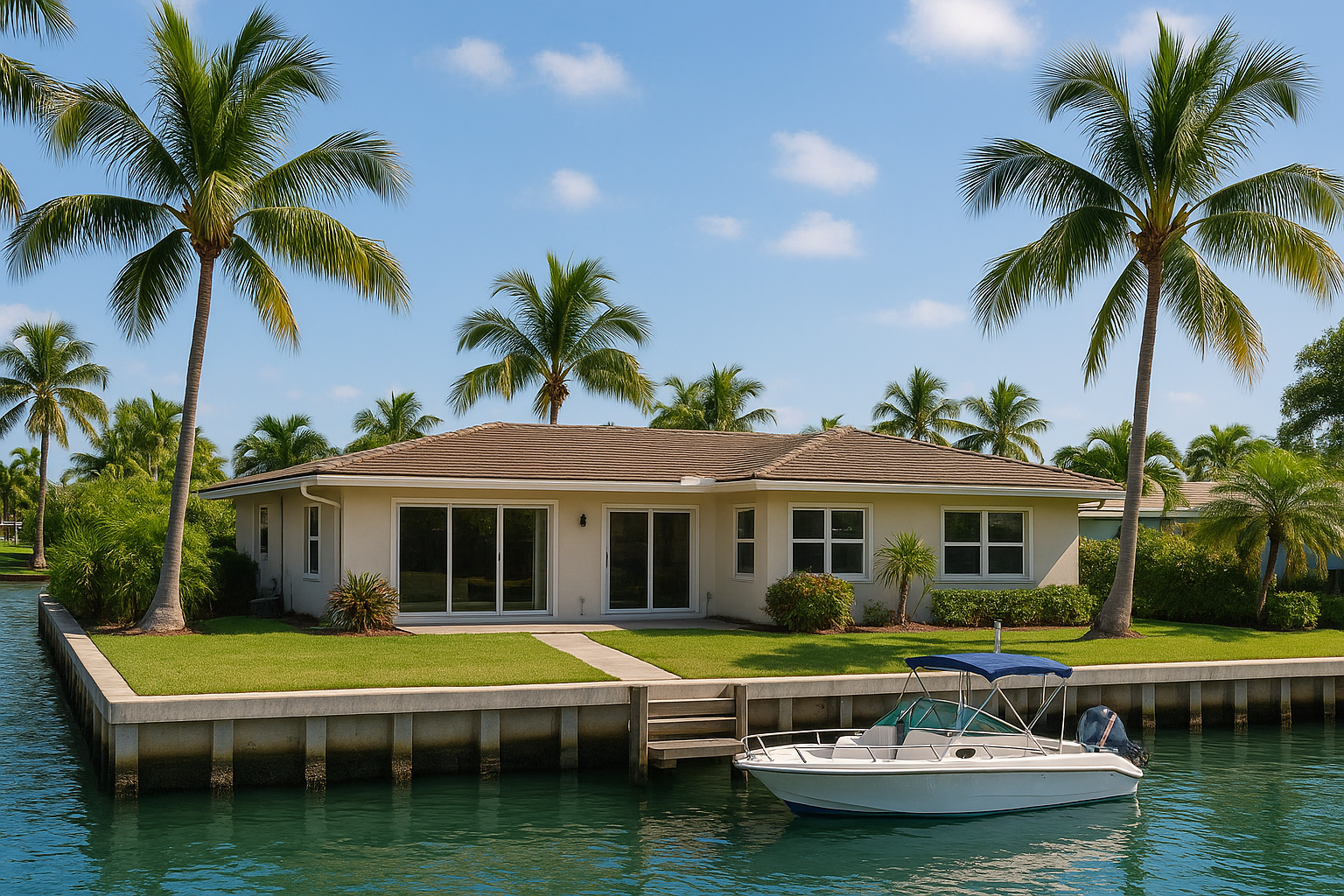
Garden Isles (ZIP 33062) is Pompano Beach's classic finger-canal neighborhood — ranch and two-story homes from the 1960s onward laid out on peninsulas of fill, most lots backing straight onto a seawall and dock with quick boat access toward the Intracoastal. When your backyard is literally a canal, moisture management isn't an abstraction.
Three patterns dominate here. First, the canal microclimate: evaporation off the water keeps humidity around these homes elevated day and night, so shaded walls, lanais, and garages dry slowly and grow surface mildew fast — and interior humidity control has less margin for error than it would a mile inland. Second, the fall tide cycle: king tides ride highest in the canals, overtopping older or settled seawalls and pushing up through yard drains; garages and slab edges on the lowest lots get wet every season. Third, storm exposure: surge and wind-driven rain arrive by water first, and Garden Isles' canal geometry funnels both. Homes here that took water in past storms and were patched rather than properly dried are exactly where assessors still find legacy growth behind baseboards.
The upside: these are mostly solid CBS homes, and the risks are predictable. Keep the seawall and yard drainage sound, watch the lowest interior walls each fall, run the AC to hold under 60% humidity, and treat any storm-water entry as a same-week drying job — and a Garden Isles home stays as dry inside as any inland one.
The king-tide factor
From roughly August through November — peaking in October — the year's highest tides push seawater up through storm drains and over low seawalls across coastal Pompano Beach, flooding low streets on perfectly rainless days. Broward County calls it sunny-day flooding, and neighborhoods near the canals and Intracoastal see it most: water rising from the drains at the curb, standing in swales, lapping at the base of seawalls twice a day for a stretch of mornings each fall.
Most of that water never enters a house, which is why it gets underestimated. But repeated wetting of garages, slab edges, ground-level storage, and the lowest courses of wall does two quiet things: it keeps those materials from ever fully drying during tide season, and it leaves salt residues that attract and hold moisture long after the water recedes — the slow, steady feed that low-wall mold loves. If tide water reaches your lot each fall, treat it as part of the house's maintenance calendar: an annual moisture scan of the lowest interior wall sections after tide season, drainage and seawall kept in repair, and anything stored on a ground-level slab lifted onto racks. And if tide water ever actually enters living space, treat it as the contaminated, corrosive water it is and dry professionally the same week.
The waterfront prevention rhythm
Homes this close to the water stay dry on routine, not luck. The calendar that works here: roof, flashing, and seal inspection every spring before storm season; seawall, yard-drain, and dock-side drainage checked before the fall tides; AC serviced yearly with the condensate line cleared and a float switch installed; and a hygrometer inside confirming the house holds 45–55% humidity. After any named storm, walk the interior perimeter with a flashlight — ceilings, window heads, and the lowest baseboards on the weather side — and treat any new stain as a live leak until a moisture meter says otherwise. None of this is expensive; all of it is cheaper than the remediation it prevents.
How it works
- Tell us what's going on. A quick call or the form — which rooms, what you smell or see, any recent storm, tide, plumbing, or AC trouble. Photos help if you can take them safely, but never disturb suspected growth to get one.
- We match you locally. A licensed, independent Florida assessor or remediator who serves this specific neighborhood and handles your kind of problem — usually the same or next business day, faster for active water.
- Free assessment. Moisture mapping with real instruments, a plain-English explanation of what's happening and how far it goes, and a written no-obligation quote you can compare against our cost guide.
- Work done right. Containment and negative air, removal of what's contaminated, drying to measured targets, the moisture source actually fixed — and independent clearance testing at the end to prove the air is clean.
The service is free to you, there's no obligation at any step, and you're always welcome to collect competing bids against the same assessment — in fact, we recommend it for larger jobs.
Nearby areas we cover
We connect homeowners across the city and its coastal neighbors. Close by: Santa Barbara Shores & Estates · Hillsboro Shores · Snug Harbor — or see all service areas.