
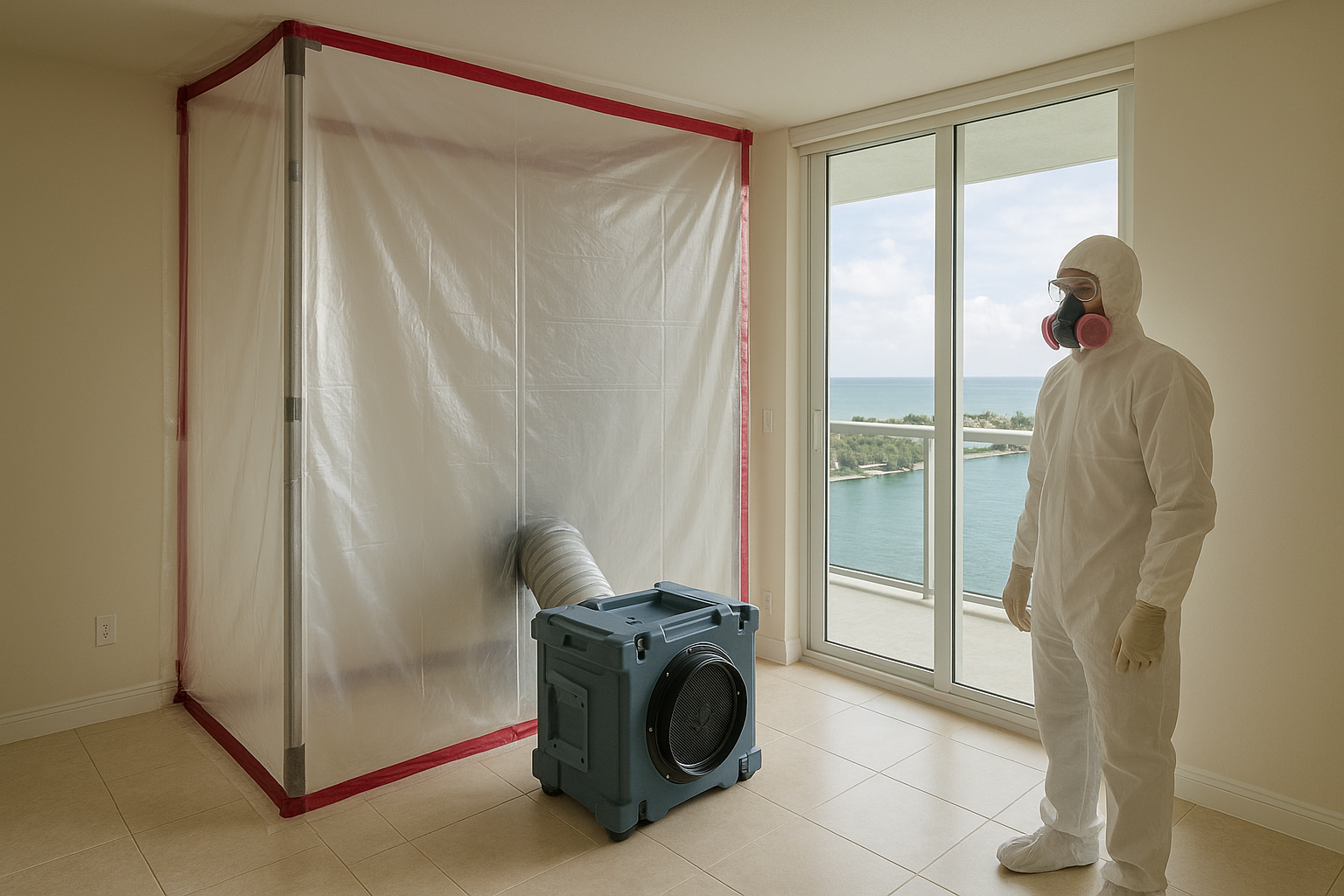
Why condo mold is different
In a single-family house, the moisture source and the fix are both yours. In a condo, water crosses ownership lines. A roof leak three floors up shows on your ceiling; a neighbor's failed water heater soaks your wall; a common-element chilled-water line sweats inside a shared chase; salt-corroded window frames leak into the wall cavity between units. Meanwhile the building's rules govern what you can open, when contractors can work, which elevator they may use, and what documentation the association requires. The remediators we connect you with work condo jobs constantly and handle all of that as part of the project.
Where mold shows up in Pompano Beach buildings
- Around AC systems: closet air handlers and fan-coil units with clogged condensate drains — the classic source in high-rise units.
- Exterior walls and window frames: wind-driven rain and salt-corroded frames let water into the cavity; growth appears at baseboards and behind furniture on outside walls.
- Ceilings below leaks: a roof issue or an upstairs plumbing failure often shows first as a spreading stain in the unit below.
- Under kitchen and bath cabinets: slow supply and drain leaks in stacked plumbing chases.
- Seasonally vacant units: snowbird units left with the AC off (or set to 82°F) through a South Florida summer can grow mold on furniture, closets, and walls with no leak at all — humidity does it alone.
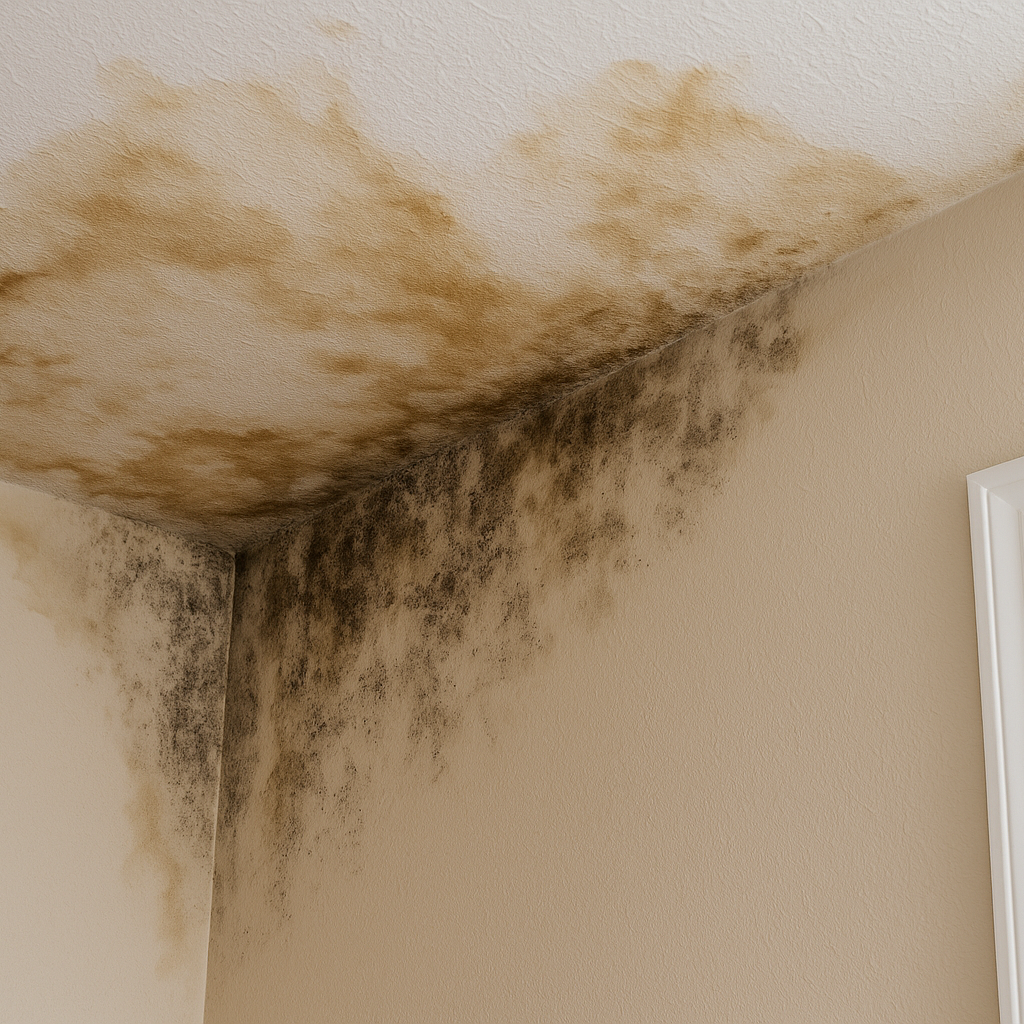
Ceiling growth traced to a common-element leak above
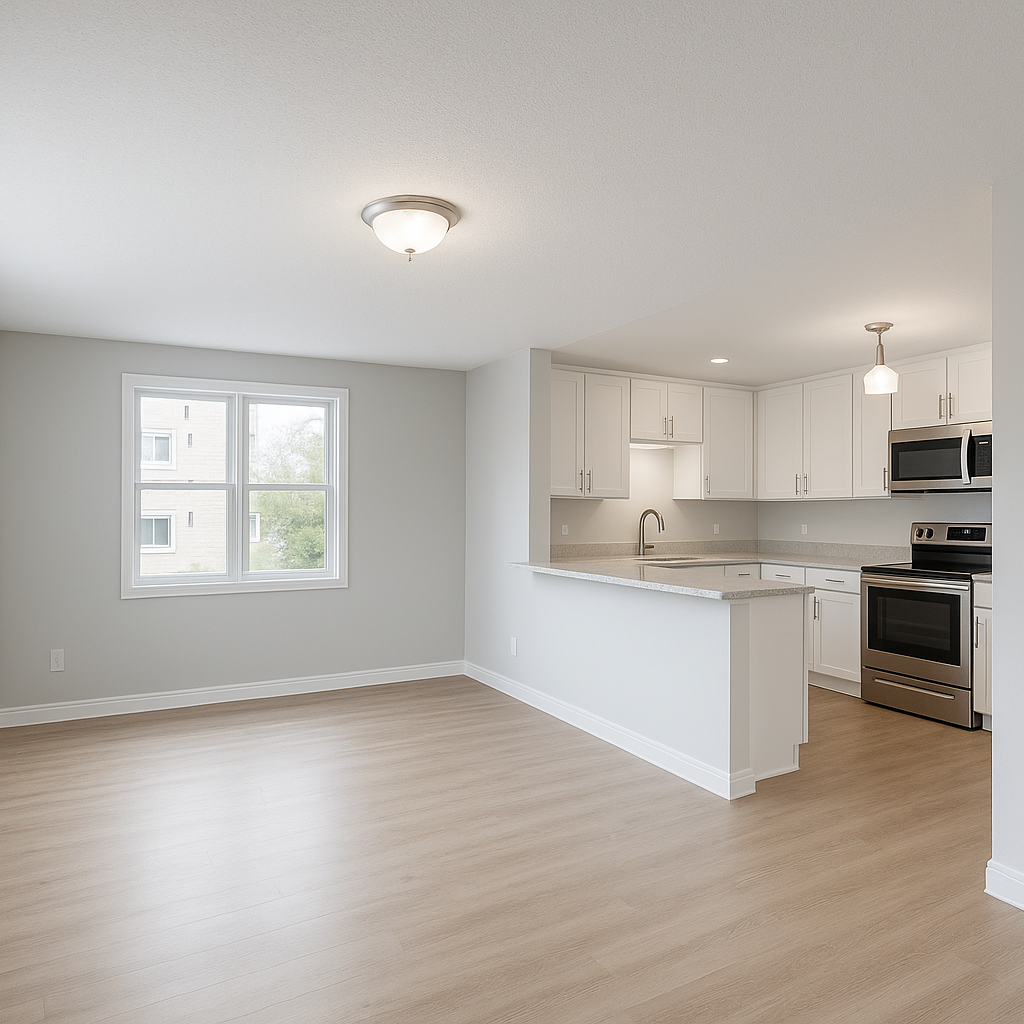
Source documented and fixed, unit remediated with clearance testing
Who pays — you or the association?
The short version: it usually follows the source and the governing documents. If the water came from a common element — the roof, exterior walls, a shared line — the association typically owns that repair, while your policy handles much of your unit's interior. If the source is inside your unit (your AC, your supply line), it's generally yours. What settles arguments is documentation: a licensed, independent assessor's report identifying the moisture source is exactly the evidence boards and insurers respond to. We cover the details in our guide to condo mold responsibility in Florida.
What a professional condo remediation includes
- Independent assessment documenting source, extent, and scope — your evidence for the board and both insurers.
- Association coordination: insurance certificates, elevator scheduling, work-hour rules, and required notices handled before work starts.
- Tight containment and negative air, so spores don't migrate to hallways or neighboring units — protecting neighbors and your liability.
- Removal, drying, and source repair, coordinated with the association when the source is a common element.
- Clearance testing and a written report, closing the loop for the board, your insurer, and any future buyer.
A word for landlords and snowbirds
If you rent your unit or leave it empty for the summer, mold is a liability and an asset problem, not just a nuisance. Florida tenants can and do raise habitability claims over mold, and a vacant-unit humidity bloom can ruin furnishings building-wide fast. A humidistat set around 58–60%, a functioning condensate float switch, and someone checking the unit monthly prevent most of it — and if it's already happened, fast documented remediation limits the damage on every front.