
Why the AC is South Florida's #1 mold machine
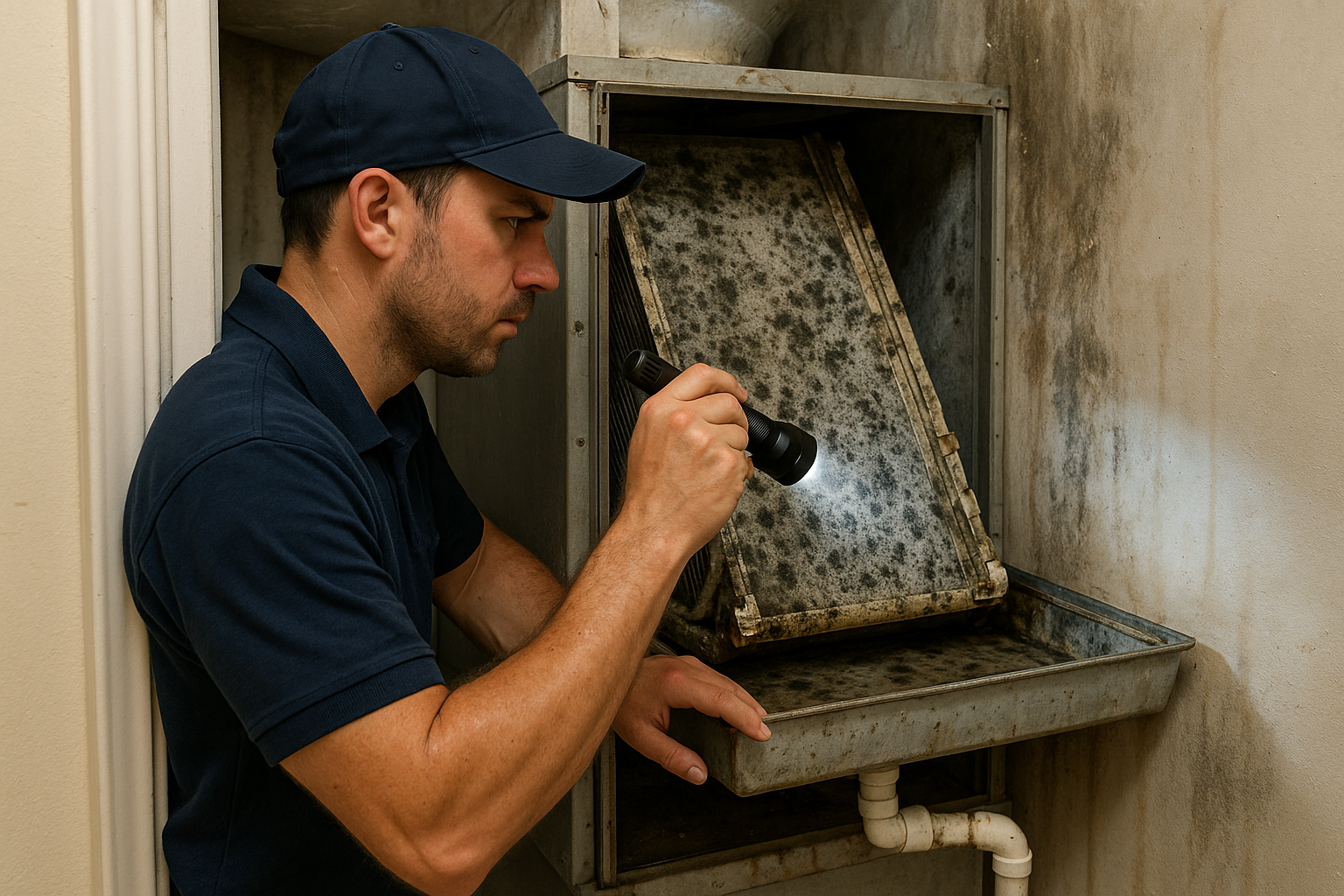
An air conditioner is a dehumidifier with a dark, damp interior. Humid indoor air crosses a cold evaporator coil, water condenses out by the gallon, collects in a drain pan, and exits through a condensate line. In Pompano Beach that process runs essentially 365 days a year, which means the coil, pan, plenum, and nearby ductwork stay wet indefinitely. Add a little dust — mold's food — and the system becomes a growth chamber sitting directly in your home's airstream. When the blower kicks on and you catch that gym-bag mustiness, you're smelling air pushed across an active colony.
The usual failure points
- Clogged condensate lines. Algae and dust block the drain; water backs into the pan and overflows into the air-handler closet, soaking drywall. This is the single most common AC-mold trigger we hear about locally.
- Oversized systems. A too-big AC cools the air fast and shuts off before it has run long enough to wring out humidity. The house feels cold but clammy — and stays above the 60% relative humidity line where mold thrives.
- Sweating ducts. Ducts carrying 55°F air through a 120°F-plus attic condense moisture wherever insulation is thin or seams leak, feeding mold at the boots and on nearby framing.
- Dirty coils and neglected filters. Dust on a permanently wet coil is a buffet. Restricted airflow makes the coil run colder and wetter still.
- Salt-air corrosion. Near the beach, salt eats coil fins and cabinet seams years early, creating leak paths and condensation problems inland systems never see.
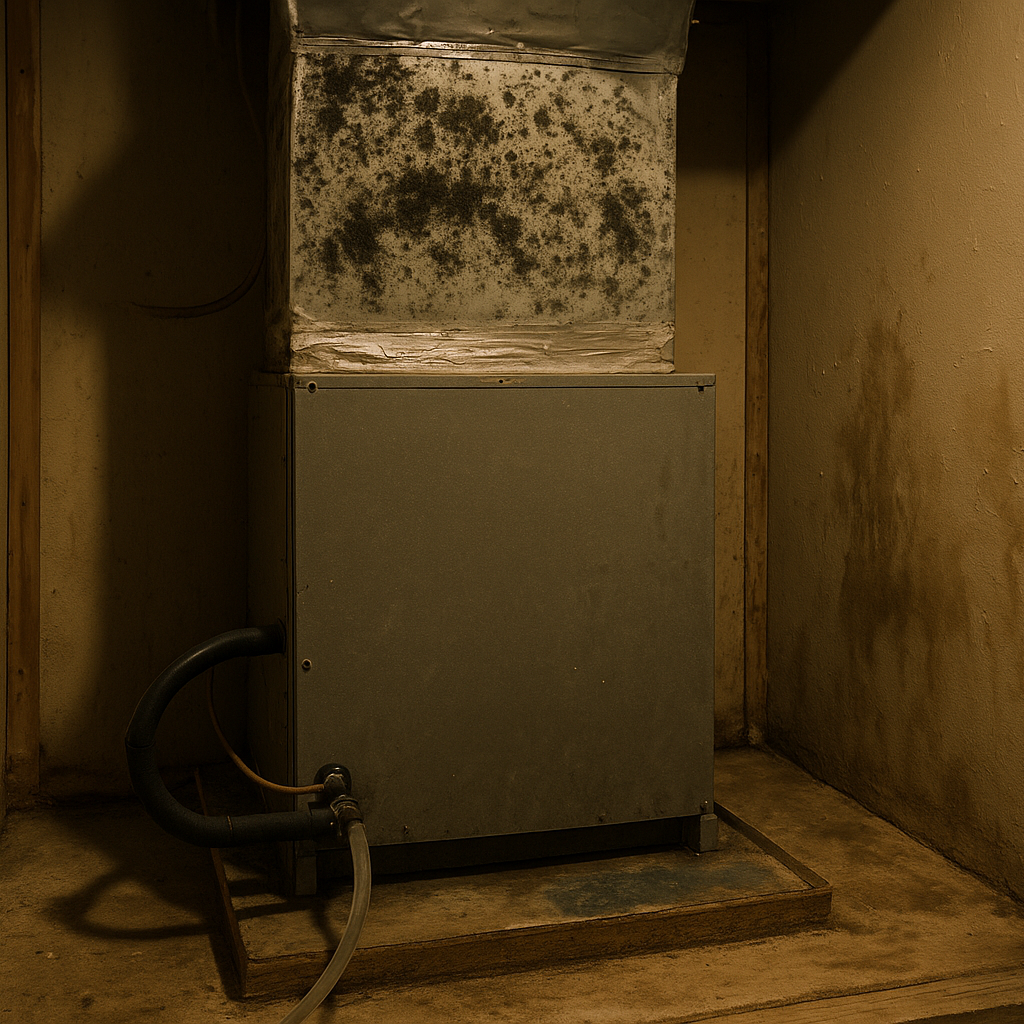
Sweating plenum and clogged drain line feeding mold
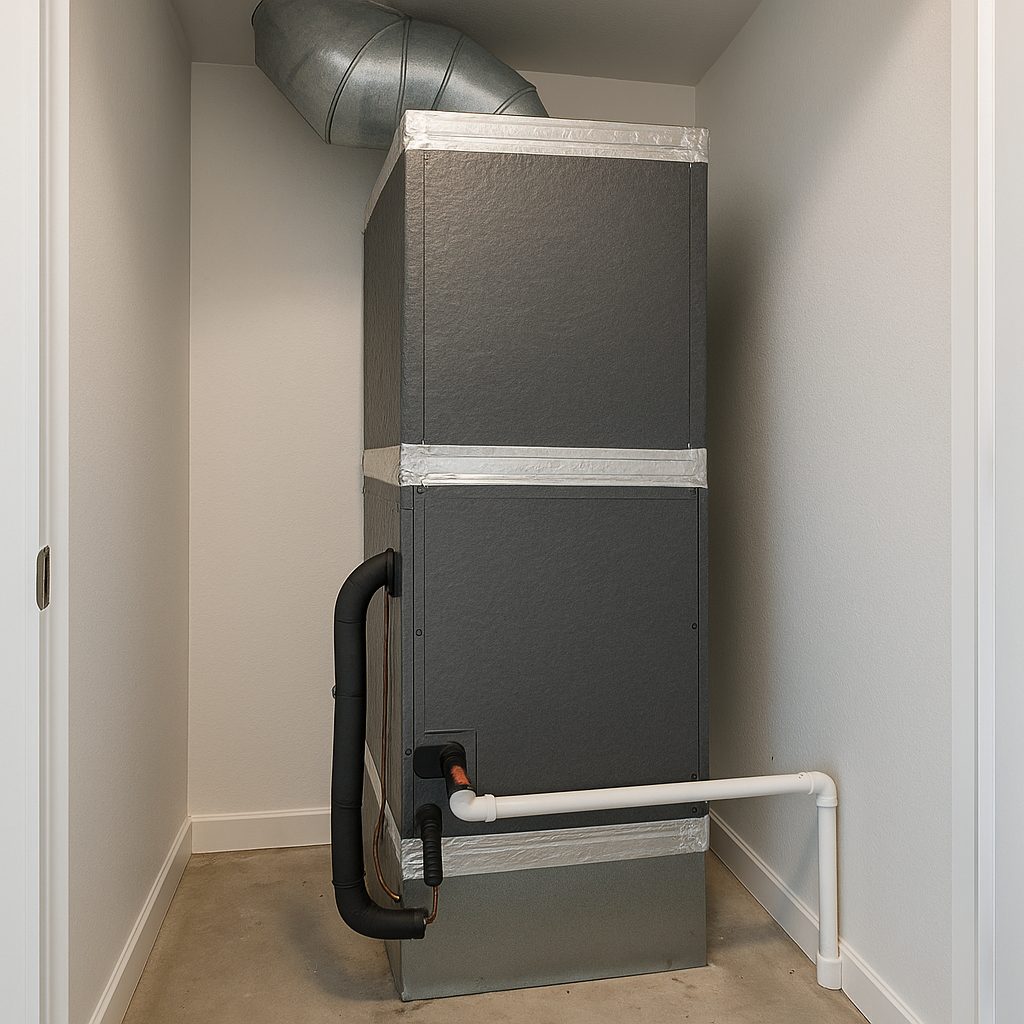
Components cleaned, drain cleared, humidity brought under control
How HVAC mold remediation works
- System inspection. Coil, blower, pan, drain line, plenum, and representative duct runs, plus indoor humidity readings.
- Component cleaning. Coil and blower cleaned and treated; the pan sanitized; the condensate line cleared and often fitted with a float switch so the next clog shuts the system down instead of flooding the closet.
- Duct decision. Sheet-metal trunks and boots can be HEPA-cleaned and treated. Flexible insulated duct with interior growth usually gets replaced — its inner liner can't be reliably cleaned, and a good pro will tell you that honestly rather than sell a cleaning that won't hold.
- Closet remediation. Mold-affected drywall around the air handler is removed under containment and rebuilt.
- The humidity fix. The part that makes it permanent: right-sizing assessment, duct sealing and insulation, and often a whole-home dehumidifier so the house holds 45–55% RH even in shoulder seasons when the AC runs less.
Cleaning without the humidity fix is a subscription
Plenty of Pompano homeowners pay for a duct cleaning, skip the moisture control, and buy the same cleaning again a year later. Mold in the air path is a symptom; the disease is a system that leaves the house humid. Fix the humidity and the cleaning becomes permanent — and as a bonus, the house feels cooler at a higher thermostat setting, which shows up on your FPL bill.