
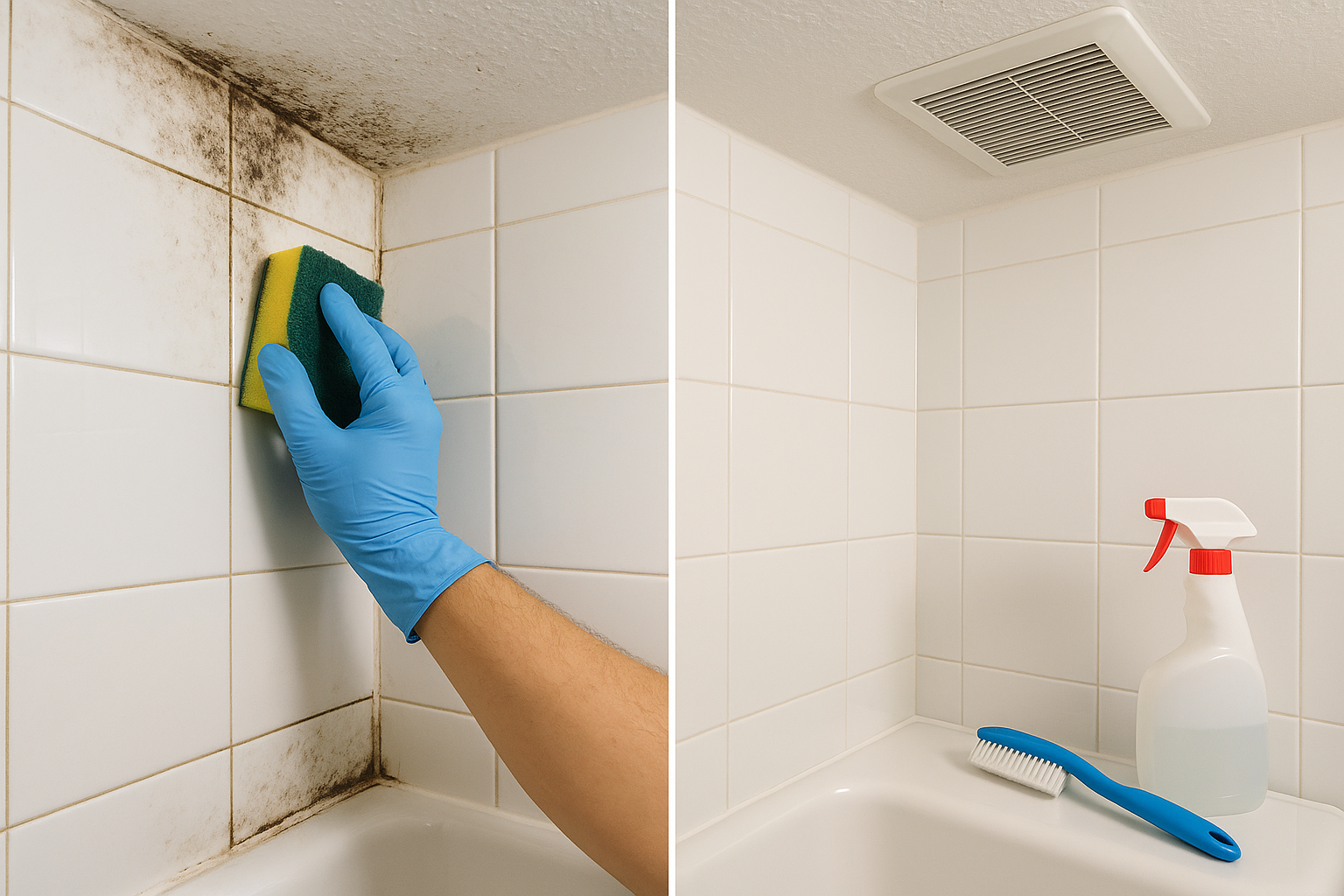
The honest rule of thumb
In South Florida humidity, a thin film of mildew on shower grout, caulk, or a window sill is close to universal, and for a healthy household it's a maintenance chore, not an emergency: clean it, improve ventilation, move on. It becomes a professional problem when it keeps returning within days, spreads onto painted drywall or the ceiling, comes with a musty smell, or follows a leak. Those are signs water is reaching porous material behind the surface — and no amount of scrubbing the front of the wall fixes the back of it.
Where it hides in Pompano Beach bathrooms
- Ceilings. The classic. A weak, missing, or never-used exhaust fan lets shower steam condense overhead — and in many local homes the fan duct dumps into the attic, feeding a second problem upstairs.
- Behind tile. Cracked grout and failed caulk let water past the surround, where it feeds mold on the backer board and framing you can't see.
- Under vanities. A slow supply or P-trap drip keeps the cabinet base wet around the clock.
- Around toilets. Failed wax rings and sweating tanks wick into the floor and wall base.
And in kitchens
- Under the sink — the single most common find: a drip you barely notice soaking the cabinet floor for months.
- Behind the fridge and dishwasher, where ice-maker and drain lines fail invisibly.
- At countertop and backsplash seams where caulk has opened.
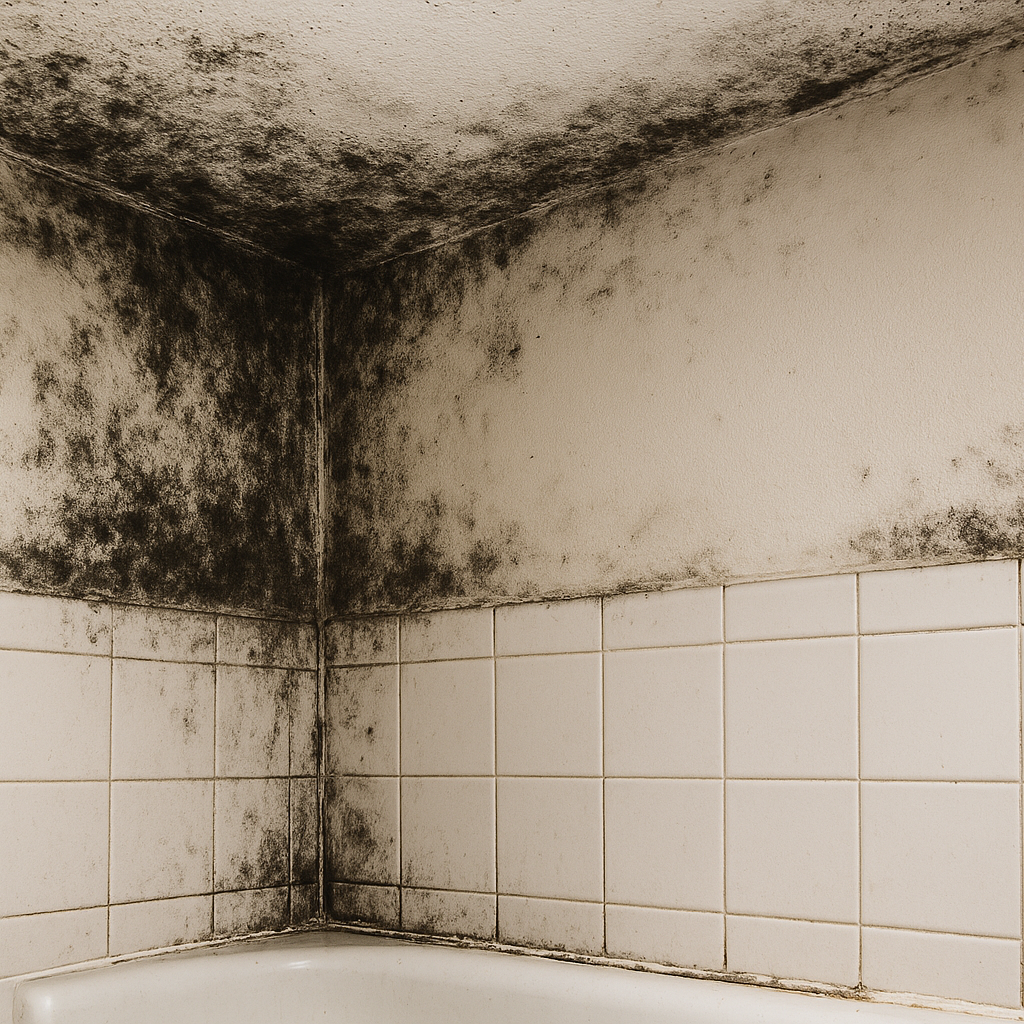
Ceiling growth from steam with no working exhaust fan
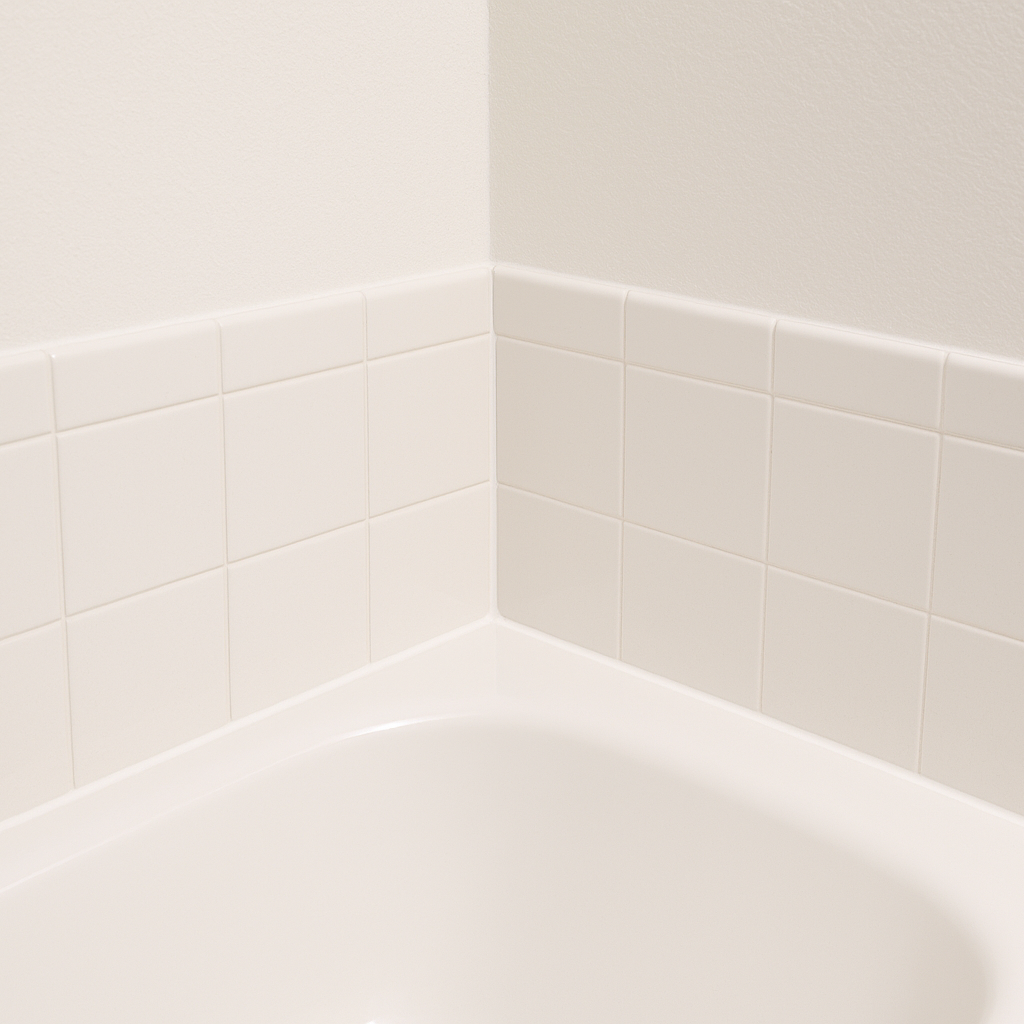
Remediated, re-caulked, and vented properly to the outside
How the pros handle it
- Find the water. A moisture meter traces how far a leak or condensation problem has spread behind tile, under cabinets, or above the ceiling.
- Contained removal. Affected drywall, backer, or cabinet material comes out under containment — small rooms make containment easy and effective.
- Dry and treat. The cavity is dried to target and framing cleaned and treated.
- Fix the source, rebuild smart. The leak is repaired, the fan upgraded and ducted outdoors, and the rebuild uses mold-resistant board and proper caulking so the same corner doesn't fail again.
The 20-minute habit that prevents most of it
The cheapest bathroom-mold prevention in Pompano Beach is a properly sized exhaust fan, vented to the outside, run during and for 20 minutes after every shower — a timer switch makes it automatic. Pair that with fresh caulk at the first sign of cracking, fixing drips promptly, and keeping the house under 60% humidity, and most bathrooms here never need a remediator at all. If yours keeps growing mold despite all that, something upstream is wrong — a hidden leak or a house-wide humidity problem — and that's worth an inspection.