This article is general information, not medical advice. For health concerns, consult a doctor — especially for asthma, allergies, or a weakened immune system.
What the science actually says
The mainstream medical consensus — from bodies like the CDC and the EPA — is measured, and it's worth stating plainly because the internet isn't. Indoor mold can cause real symptoms, particularly allergic and respiratory ones, and more so in sensitive people. Indoor mold has not been shown to cause the dramatic systemic "toxic mold" illnesses often claimed online. The honest bottom line: you don't need to panic about mold, and you shouldn't live with it either. Both halves of that sentence matter.
Common symptoms
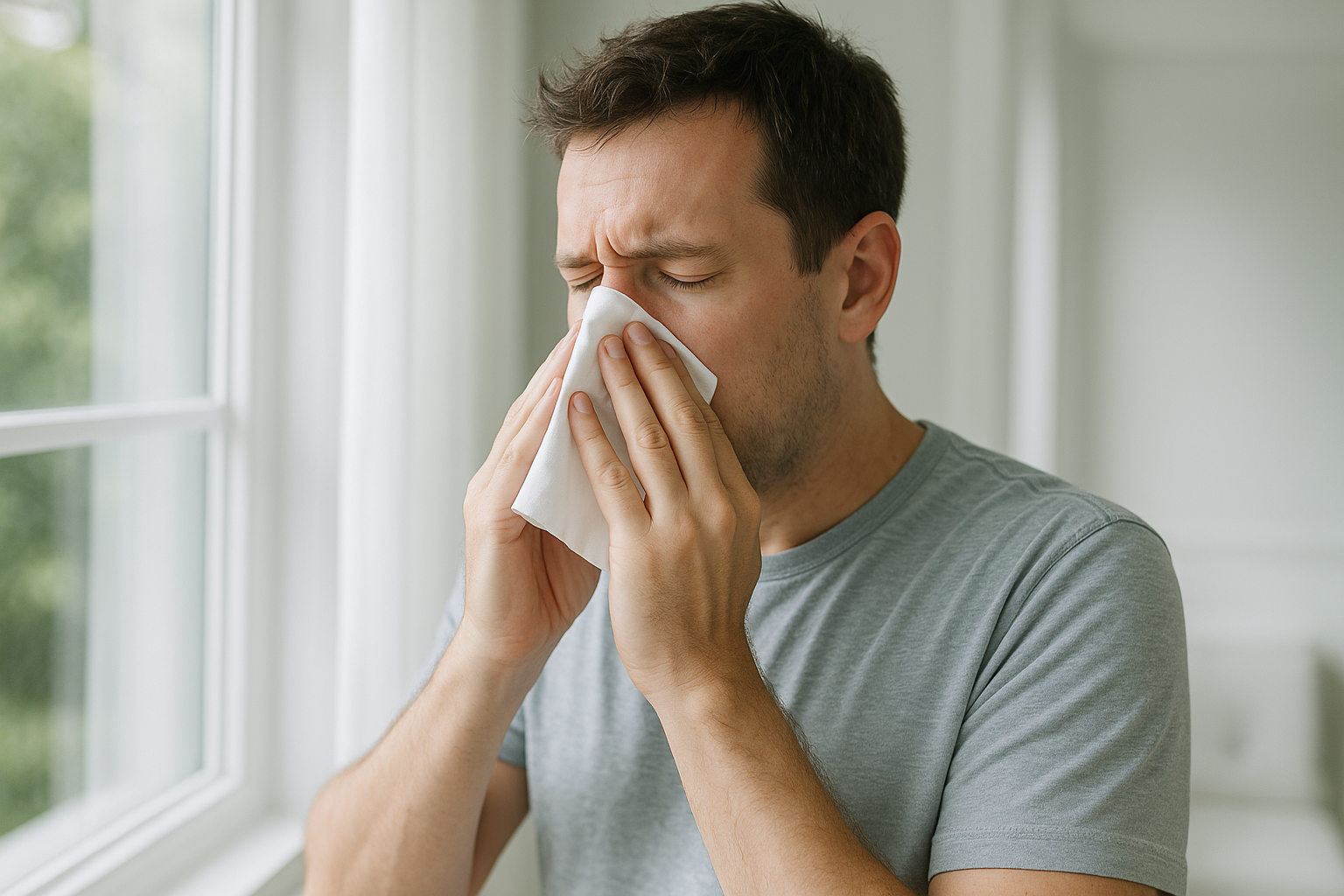
- Nasal congestion, runny nose, sneezing
- Coughing, wheezing, chest tightness, shortness of breath
- Itchy or watery eyes, throat irritation
- Skin irritation in some people
- Worsening of existing asthma — among the best-established effects
- Sinus congestion and headaches; a general run-down feeling at home
These overlap heavily with South Florida's other allergy triggers — pollen, dust mites that themselves thrive in our humidity, and outdoor mold, which is abundant here year-round. That overlap is exactly why the pattern matters more than any single symptom.
The pattern that points indoors
The most reliable clue that home mold is involved: symptoms that ease when you leave and return when you come back. Better at the office, on vacation, at a relative's house — worse within hours of being home again, and worst in one particular room or when the AC runs. Seasonal outdoor allergies don't track your address that tightly. If your household notices that geography, it's worth investigating the home alongside seeing a doctor about the symptoms.
Who is most at risk
- People with asthma or allergies, for whom mold is a documented trigger.
- Infants and young children, with developing airways.
- Older adults — relevant across Pompano Beach's many 55+ communities, where sensitivity is higher and a musty unit deserves faster action.
- Anyone immunocompromised — from illness, chemotherapy, or transplant medication — who can be vulnerable to fungal infection and should avoid mold exposure entirely, leaving any disturbance and cleanup to professionals.
- People with chronic respiratory conditions like COPD.
For these groups the threshold for action is lower: what a healthy adult might monitor, a household with an asthmatic child or an elderly resident should get assessed and resolved.
The South Florida amplifier: your AC
There's a reason home mold seems to affect the whole household here rather than one person in one room. The air conditioner runs nearly every day and circulates air through every room, so mold growing on the coil, in the drain pan, or in the ducts doesn't stay put — the system distributes spores house-wide each cycle. That's how a hidden problem becomes family-wide symptoms, and it's why the musty-at-startup smell deserves attention as a health signal, not just a nuisance. Our AC mold page covers the fix.
What to do if you suspect mold is affecting your health
- See a doctor about the symptoms — they can assess allergy, asthma, and other causes, and treat what's treatable.
- Look for the source at home: musty smells, visible growth, a hygrometer reading above 60%, any leak or storm history.
- Get an independent inspection if you suspect hidden mold — sampling shows whether indoor spore levels are actually elevated versus the outdoor baseline, and where the moisture is.
- Remediate the cause, not just the symptom: remove the growth, fix the moisture, verify with clearance testing. Symptom relief follows removing the exposure.
Many households notice real improvement once the source is gone and humidity is controlled. The goal is to treat the cause — the moisture and the colony — rather than to chase symptoms while the source keeps producing.