Why inspection matters more in South Florida
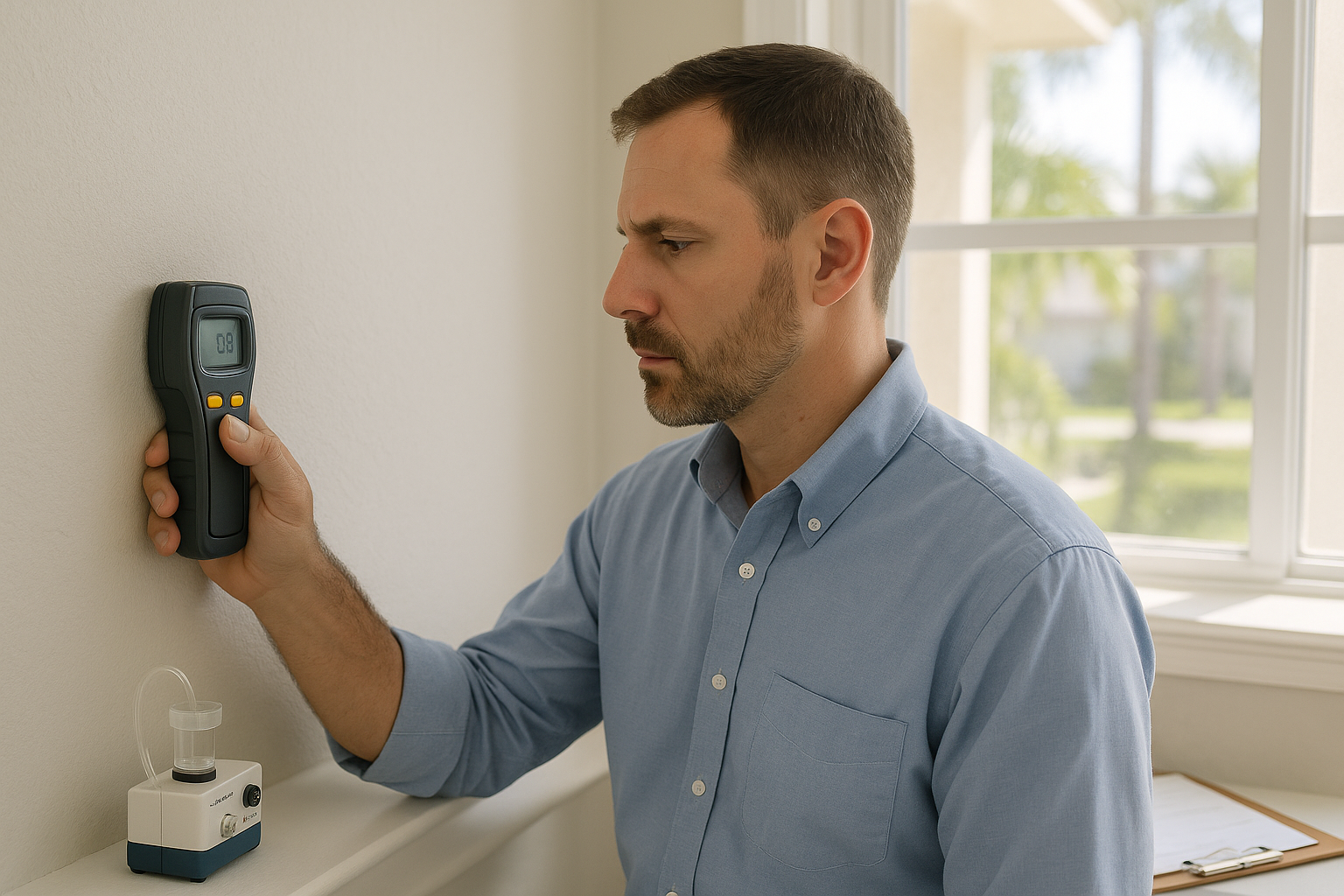
Pompano Beach homes are sealed boxes running air conditioning nearly every day of the year. That keeps you comfortable, but it also means moisture that gets inside — from a roof leak, a sweating duct, a slab or supply-line drip, or a storm — doesn't evaporate away the way it might in a dry climate. It sits inside wall cavities and above ceilings, quietly feeding mold that you smell long before you see. An inspection with real instruments reads what the eye can't.
Florida is also one of the few states that licenses mold assessors and mold remediators separately, and state law prohibits the same company from both assessing and remediating the same project in most cases. That's a genuine consumer protection: the person who defines your problem shouldn't be the person who profits from making it bigger. The independent assessors we connect you with give you a written report you own — then you can put remediation bids against it.
What a proper Pompano Beach inspection includes
- Moisture metering. Pin and pinless meters read the actual water content of drywall, baseboards, and cabinetry, mapping how far a leak has wicked past the visible stain.
- Thermal imaging. An infrared camera reveals cool, evaporating-damp patches behind walls and ceilings — the classic signature of a hidden roof or AC-condensate leak.
- Humidity readings. A hygrometer tells the assessor whether the house itself is the problem. Plenty of Pompano homes sit above 60% indoor relative humidity all summer, which grows mold with no leak at all.
- Air sampling. Spore-trap samples, compared against an outdoor baseline, show whether elevated spore counts are actually circulating in your living space — and South Florida's outdoor air is spore-rich, so the baseline comparison matters.
- Surface sampling. Tape-lift or swab samples confirm what a specific stain is, useful for real-estate deals and insurance documentation.
When to book an inspection
- A musty or earthy smell, especially one that's strongest when the AC starts up
- After any water event — a hurricane or tropical storm, a roof leak, a plumbing failure, or king-tide flooding in the fall
- Buying or selling a home or condo — a clean third-party report protects both sides, and matters extra in buildings with storm history
- Condo disputes, where documentation of the source (unit vs. common element) decides who pays
- Allergy, asthma, or sinus symptoms that ease when you leave the house
- Any visible staining on ceilings, walls, or around AC vents and closets
Reading the lab report without the jargon
The lab lists spore types and counts per cubic meter for each sample. The raw numbers matter less than two comparisons: indoor counts should be similar to or lower than the outdoor baseline, and the types should match. When an indoor sample shows water-damage molds — Stachybotrys, Chaetomium, heavy Aspergillus or Penicillium — that aren't prominent outside, that's the fingerprint of an active indoor moisture problem rather than ordinary Florida air drifting in the door. A good assessor walks you through exactly this, in plain English, and tells you what it means for scope.
Inspection and real estate in a storm-history market
In coastal Broward, a property's water history follows it. Buyers ask about hurricane damage; condo boards keep records of past leaks; insurers ask about prior claims. An independent mold inspection with lab results is the clean way to answer those questions on both sides of a deal — it either documents that a past repair actually worked, or catches the patched-over problem before it becomes yours. If you're buying a home that took water in Irma or any storm since, ask specifically for remediation records and a clearance test, and if none exist, price an inspection into your due diligence. It's a few hundred dollars against a five-figure surprise.