Why this question is uniquely hard in a condo
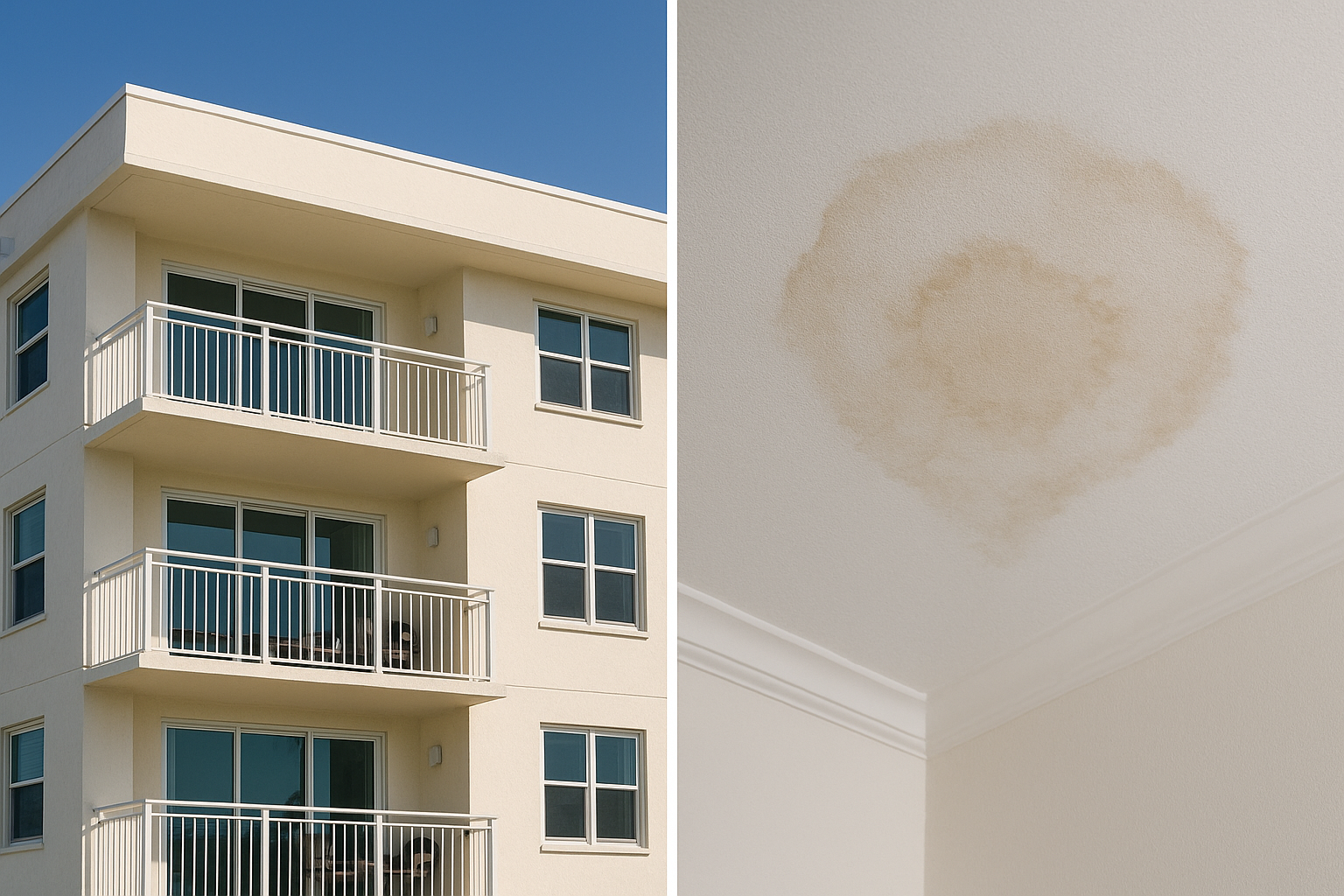
In a house, the leak and the fix are both yours. In a Pompano Beach condo — and this is a condo-heavy city, from the beachfront towers to Palm Aire and Cypress Bend — water routinely originates in one owner's world and surfaces in another's. A roof lets go three floors up; a riser pinholes inside a shared chase; a neighbor's water heater fails; a common-element window system leaks into the wall between units. Who pays for the resulting mold depends on three things: where the water came from, what your declaration says, and how well the source is documented.
The general rule: follow the source
Most Florida condo documents divide the building into common elements (roof, exterior walls, structural components, and shared systems the association maintains) and the unit (generally everything from the drywall in, though declarations vary on exactly where the line falls). As a rule of thumb:
- Water from a common element — roof, exterior envelope, a shared plumbing riser or drain stack — puts the source repair on the association.
- Water originating inside your unit — your AC, your supply line, your appliance — puts the source on you.
- The interior remediation (your drywall, flooring, cabinets) is frequently the owner's responsibility and insurance even when the association owns the source repair — but this is exactly where declarations and Florida law interact, and where disputes concentrate.
Florida's Condominium Act (Chapter 718) and your specific declaration govern the details, and they don't all read alike. Some assign more to the association; some push more to owners. The document controls, which is why step one in any condo mold situation is reading your declaration's maintenance and insurance sections — or having someone read them for you.
Insurance: two policies, one problem
Condo mold usually involves both the association's master policy and your individual unit-owner (HO-6) policy. The master policy covers the building structure and common elements to the extent the declaration defines; your HO-6 covers your unit's interior, personal property, and often betterments and improvements. Both may carry mold sublimits. When a covered sudden event causes the mold, coverage may apply up to those limits; long-term seepage and maintenance-driven mold typically aren't covered by either. This is why documenting the source as sudden-versus-gradual, and common-versus-unit, is the whole ballgame — it routes the claim to the right policy and determines whether it's covered at all.
What actually resolves it: an independent assessment
Arguments between owners and boards stall on opinion. They move on documentation. A licensed, independent Florida mold assessor's report — identifying the moisture source, its path, and the extent — is the neutral evidence boards, managers, and both insurers respond to. Because Florida licenses assessors separately from remediators, that report comes from someone with no stake in enlarging the remediation, which is precisely what gives it weight. Order the assessment early, before anyone repaints or argues; it's the cheapest step and the most decisive.
A practical sequence for condo owners
- Report in writing immediately to the association and property manager — email, dated, with photos. Verbal reports vanish; written ones start the clock and the paper trail.
- Get an independent assessment documenting source and extent. Don't let anyone start removal — or blame — before this exists.
- Notify your HO-6 insurer and ask the association to open a claim on the master policy if a common element is involved.
- Remediate under containment with a licensed remediator, coordinating association access, insurance certificates, and work-hour rules. See our condo remediation page.
- Close with clearance testing and keep the entire file — it protects you with the board, the insurer, and your future buyer.
Special cases worth knowing
Snowbird and rental units: a vacant unit that blooms mold over a summer with the AC off is generally the owner's responsibility — it's a maintenance issue, not a covered event — which is why the humidistat-and-monthly-check routine matters financially, not just physically. Milestone inspections and reserve projects: older, taller Florida condos now face structural inspection and reserve-funding requirements, meaning roofs and risers get scoped on a schedule; if your unit has an unexplained musty smell, documenting it before those projects can fold your fix into the building's work. Tenant habitability: if you rent your unit, Florida tenants can raise mold as a habitability issue, so fast documented remediation is landlord self-protection.