
The twelve signs
- A musty smell when the AC starts. South Florida's signature symptom. The blower is pushing air across growth somewhere in the system — coil, pan, plenum, or ducts — and delivering it room to room. Start at the AC, not the walls.
- A musty smell in one room only. Localized odor means a localized source: a window leak, a plumbing wall, a converted porch or garage with a damp slab, or a closet on an outside corner.
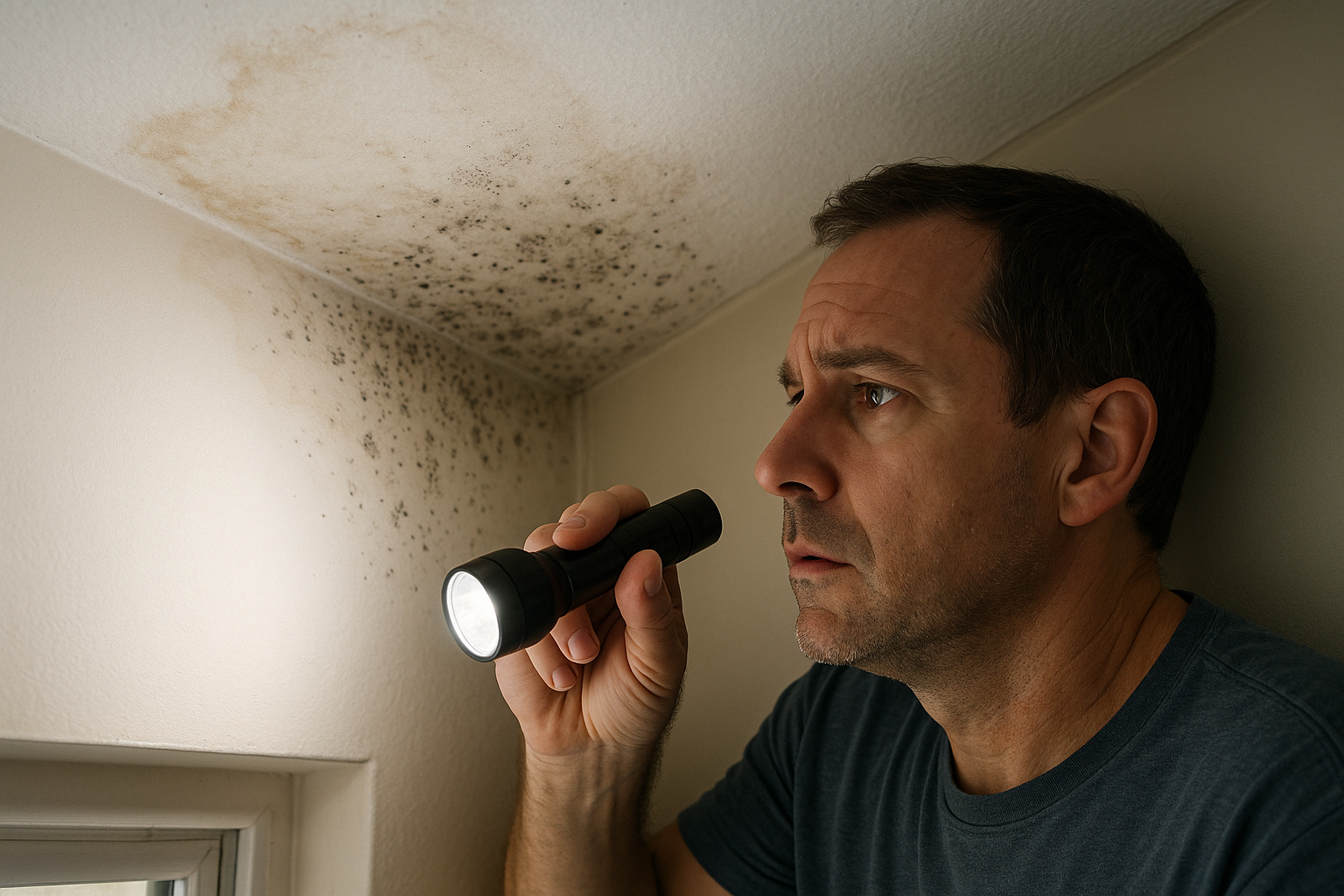
- Ceiling stains — especially after a storm. Tan or brown rings mean water has traveled. On the top floor, think roof or (in a condo) the unit above; near the AC closet, think condensate.
- Bubbling, peeling, or "sweating" paint. Moisture is coming through the wall from behind. Repainting over it is the classic local mistake — it hides the messenger.
- Wicking stains at baseboards. Water climbing the bottom of a wall points to slab-edge moisture, tide or storm water history, or a plumbing leak below — the signature find in canal-front and post-flood homes.
- Warped, cupped, or lifting floors. Wood and laminate telegraph slab moisture early. In older neighborhoods this often traces to end-of-life plumbing under the slab.
- Grout and caulk that re-blacken within days. Fast-returning mildew means moisture is feeding it from behind the surface, not from shower spray.
- Visible fuzz or speckling on closet contents. Shoes, bags, and furniture backs growing mold with no leak anywhere is the humidity bloom — the house has been living above 60% RH. Check the hygrometer before blaming a pipe.
- Condensation on supply vents or windows. Sweating registers mean humid indoor air meeting cold metal — a humidity-control failure and a mold precursor at the vent boots.
- Allergy or asthma symptoms that ease when you leave. Congestion, cough, itchy eyes, or headaches that improve at work or on vacation and return at home point indoors. See mold and your health.
- A clammy, cold-but-damp feel. The oversized-AC signature: temperature fine, humidity high. It's not mold yet — it's the invitation.
- A water event in the home's history. Storm intrusion, tide water, a burst line, a roof leak — if it wasn't professionally dried at the time, assume the question is open until a moisture scan closes it.
Where to look first in a Pompano Beach home
Local mold has favorite addresses: the AC closet and the wall it shares with living space; bathroom ceilings and behind tile; under kitchen and bath sinks; window heads and sills on the weather side; closets on exterior corners; the lowest two feet of wall in any home with storm or tide history; and, in condos, the ceiling below any neighbor's plumbing. A flashlight walk of those spots twice a year — and after every named storm — catches most problems at the cheap stage.
Which signs are urgent?
Active water always is: a spreading stain, a wet wall, anything after a storm — in this heat you have 24–48 hours before wet materials start growing. Health-pattern signs (10) are urgent in households with asthma, young children, elderly members, or anyone immunocompromised. The rest are schedule-an-inspection signs: real, worth acting on within days, but not emergencies. What none of them are is paint-over-and-forget signs.
What to do when a sign shows up
Don't scrub large growth — disturbing it without containment seeds the whole air-conditioned house. Photograph it, note when it appeared and what the weather or plumbing was doing, check your hygrometer, and get an independent assessment if the source isn't obvious. Florida licenses assessors separately from remediators precisely so the person who scopes your problem isn't the person selling its removal — use that. And if the sign is a smell with nothing visible anywhere, that's not reassuring; that's the definition of a hidden source.