
First: the clock you're racing
In Pompano Beach's warmth, mold can establish in wet drywall, insulation, and cabinetry within 24 to 48 hours. Everything in this playbook serves one goal: get materials dry — or removed — inside that window. The difference between a two-day drying job and a five-figure remediation is usually nothing more than how fast the first day went.
Hours 0–2: safety, then the source
- Electricity first. Never enter standing water near outlets or the panel. If water is near electrical, cut power at the breaker only if you can reach it dry, or wait for a professional.
- Stop what you can. Main shutoff for plumbing failures; tarps for active roof intrusion once conditions are safe. Storm and tide water stops on its own schedule — your job is what happens next.
- Know your water. Clean supply water is the forgiving kind. Storm surge, king-tide seawater, canal overflow, and anything that crossed the ground is contaminated Category 3 water — porous materials it soaked will need removal, not just drying, and salt adds corrosion to the bill. Protect yourself accordingly: gloves, boots, no bare-skin contact.
Hours 2–6: document, then move water
- Photograph and video everything before you change anything. Wide shots of each room, close-ups of water lines on walls, serial numbers on damaged appliances, the exterior source if visible. This ten minutes is the backbone of any insurance claim — flood or homeowners.
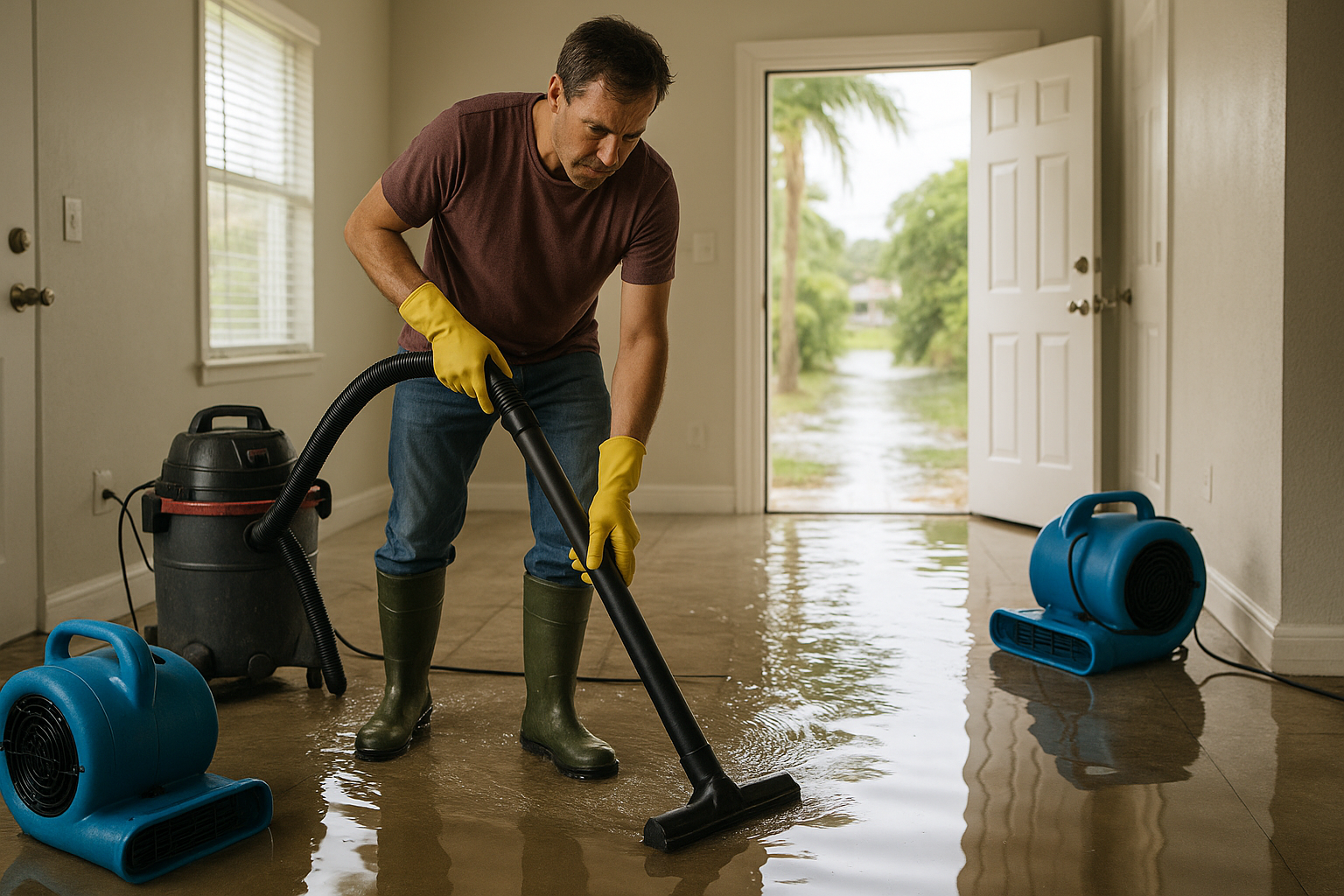
- Then extract. Wet-vac and pump out standing water; squeegee slabs; pull up rugs and get furniture onto blocks or out.
- Start the AC if it's safe. It's your built-in dehumidifier. Do not open the windows to "air it out" — South Florida outdoor air adds moisture; it doesn't remove it.
- Call for professional drying now, not after you've "seen how it goes." Post-storm demand spikes regionally; your place in the queue is set by when you call. Call (754) 714-7793 and we'll get a licensed local pro moving.
Day 1–2: open, dry, decide
Professional mitigation in these first days looks aggressive because it has to be: baseboards pulled, wet drywall cut in a clean line above the water mark (the "flood cut"), soaked insulation and carpet pad removed, cabinet toe-kicks opened, and commercial air movers and dehumidifiers running around the clock with moisture readings logged daily. For contaminated water, soaked porous materials come out, period — drying dirty seawater into place doesn't sanitize it. For clean water caught fast, much more can be dried in place. This is exactly the judgment call a licensed pro makes with meters rather than guesses, and it's where the money is saved or lost.
The insurance lane matters
Rising water is flood insurance (NFIP or private) — standard Florida homeowners policies exclude it. Wind-driven rain through storm damage is typically the homeowners policy. Sudden plumbing failures are homeowners territory too, with mold consequences usually capped by a sublimit (commonly $10,000). The lanes have different adjusters, deadlines, and paperwork, so report to the right carrier promptly, keep every receipt including your own supplies, and don't discard removed materials until documented or the adjuster agrees. Our Florida insurance guide walks through it.
What not to do
- Don't repaint or re-carpet on a schedule the moisture meter didn't approve. Sealing damp materials behind new finishes is how patched flood houses grow hidden colonies — assessors find them for years afterward.
- Don't bleach your way out. On porous materials bleach whitens the surface, adds water, and leaves the roots. Removal is the fix for soaked drywall, not chemistry.
- Don't run the AC if the system itself flooded. A ducted system that took water needs professional attention before it becomes the distribution network for the problem.
- Don't wait on the adjuster to start mitigation. Every policy expects you to prevent further damage; documented emergency drying is protected, and delay is not.
After the dust settles
Once everything reads dry and repairs are done, close the loop: keep the moisture logs and photos in the house file, fix whatever let the water in, and — after any significant event — consider clearance testing so the file says "verified" rather than "probably fine." If you're reading this months after a flood that was handled casually, it's not too late to check: a moisture inspection of the old water line answers in an hour what's been quietly uncertain since the storm.