
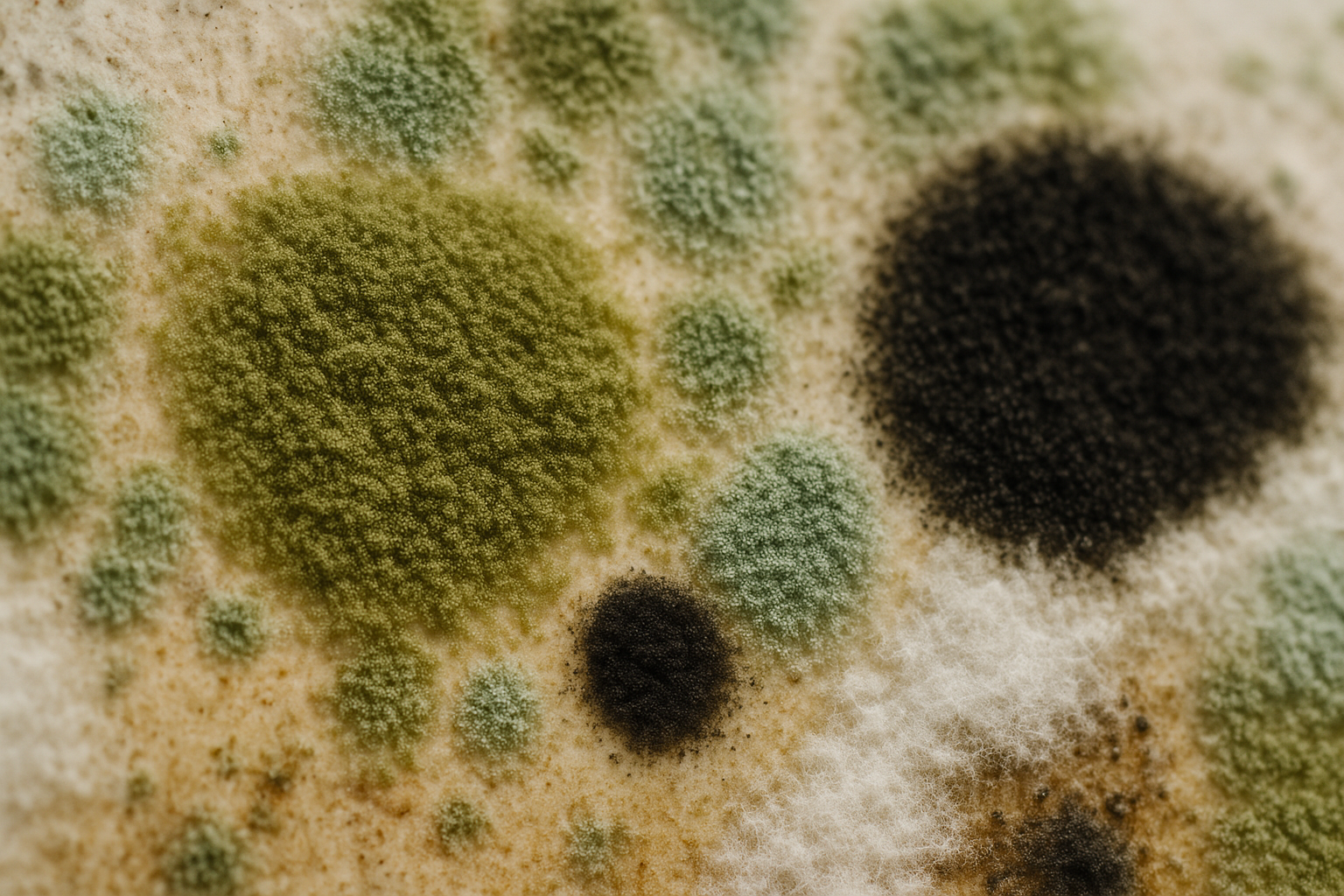
The one thing that matters most
Homeowners often want the mold identified, as if the name changes the plan. Usually it doesn't. Any mold growing indoors means one thing — moisture — and the response is the same regardless of species: find and fix the water, remove contaminated porous material under containment, verify the air. Identification earns its keep in specific situations (a real-estate deal, an insurance or condo dispute, a household member who's immunocompromised), but for most Pompano Beach homes, the species is trivia and the moisture is the story. With that said, here's what's actually growing.
The molds you'll actually meet in South Florida
Cladosporium
Olive-green to brown, suede-textured, and probably the most common mold in Florida homes. It grows on painted walls, fabrics, and around the condensation-prone spots our climate specializes in — window frames, AC vents, bathroom surfaces. A routine allergy trigger, rarely a structural alarm, but a reliable sign of a humidity or condensation problem.
Aspergillus
Extremely common indoors, appearing in many colors and textures on walls, insulation, and dust. Thrives in exactly the warm, humid conditions Pompano Beach provides, and shows up routinely in local air samples. Some species matter more for immunocompromised individuals, which is one of the few times exact identification changes anything.
Penicillium
Blue-green and fuzzy, fast-spreading on water-damaged materials, carpet, wallpaper, and insulation — a frequent find after leaks and floods. A common allergen, and quick to colonize once materials stay wet, which is much of why speed matters after any water event here.
Alternaria
Dark and fuzzy, partial to damp spots — showers, under leaky sinks, around windows. A well-known allergen and often the mold people find in South Florida bathrooms and around condensation.
Stachybotrys chartarum ("black mold")
The famous one: greenish-black, often slimy, and needing material that has stayed wet for days — chronic leaks, flood-soaked drywall, long-running condensation. It's the species behind most "toxic mold" headlines, and while the reality is more measured than the hype (see mold and your health), it does signal serious sustained moisture and warrants containment-first removal. More on our black mold page.
Chaetomium
Found in chronically water-damaged buildings, often alongside Stachybotrys, with a distinctive musty odor. Its presence points to long-term moisture — the kind of finding that says a leak has been active far longer than anyone realized.
Why color tells you little
"Black mold" is a description, not a diagnosis. The same species can appear different colors on different materials, and very different species can look alike — plenty of dark molds aren't Stachybotrys, and Stachybotrys isn't always jet black. Trying to assess danger by color leads people to panic over harmless surface mildew and shrug off genuine problems. What reliably matters is simpler and more useful: mold is growing, which means water is present, which means something needs finding and fixing.
When identification is worth it
- Real-estate transactions, where a documented lab result reassures or informs a buyer.
- Insurance and condo disputes, where the type and its implied moisture history support a claim or assign responsibility.
- Immunocompromised households, where specific species (certain Aspergillus) carry real medical weight.
- Verification, where post-remediation clearance testing confirms the air is back to a normal profile.
In each case a licensed assessor takes air or surface samples for lab analysis. Outside those cases, spending on speciation instead of on finding the leak is usually the wrong trade — the moisture is what you're actually paying to solve.
The bottom line for Pompano Beach homeowners
Whatever the Latin name, the playbook holds: don't disturb a large colony without containment, find and fix the moisture source, remove contaminated porous materials, and verify. If you want certainty about what you have — or you just want it gone — start with an independent inspection and test, and let the moisture reading, not the color, drive the plan.